Naikan Therapy in New Zealand: A Japanese Method for Self-Reflection and Healing

Ishin Yoshimoto (1916-1988)
Discover the Japanese practice of Naikan therapy – a gentle method of self-reflection that helps people understand relationships, process life experiences, and cultivate gratitude and inner peace
Zen-style Introduction
Sometimes the most important answers in life are not found by searching outside, but by quietly looking within.
Naikan therapy is a Japanese practice of structured self-reflection that helps people understand their relationships, life experiences, and the deeper meaning behind them. Through simple yet powerful questions, it allows us to rediscover gratitude, develop emotional resilience, and see our lives with greater clarity.
At Hana Counselling, Naikan therapy is offered as a gentle and supportive approach for people who wish to reflect on their experiences, heal from difficult relationships, and cultivate a deeper sense of peace and understanding.
What is Naikan Therapy?(内観)
In Japanese, 内 “Nai” means “inside,” and 観 “Kan” means “observe” or “watch.”
Naikan literally translates as “looking inward” or self-reflection.
Naikan therapy is a structured method of reflection that helps people examine their relationships and life experiences in a calm and compassionate way. Through guided questions, individuals can gain deeper insight into themselves, their connections with others, and the meaning of their experiences.
Origins of Naikan Therapy
Naikan therapy was formalized by the Japanese Buddhist practitioner Ishin Yoshimoto (1916–1988) in the mid-20th century.
Historically, Buddhist monks in Japan often withdrew from ordinary social life to dedicate themselves to serving their communities. Their training involved studying Buddhist philosophy, physical discipline, and mental cultivation in order to develop wisdom, resilience, and compassion. Many monks later served their communities as counselors, mediators, advisors, and spiritual guides.
Naikan reflection was part of this tradition, helping practitioners understand themselves deeply and cultivate a compassionate awareness of their relationships.
Yoshimoto adapted this reflective practice so that ordinary people could use it in daily life to better understand themselves and the meaning of their relationships.
Naikan reflects a uniquely Japanese perspective that emphasizes interconnectedness, gratitude, and relational awareness.
How I Use Naikan in My Practice
I first learned Naikan in the 1990s while studying at a university in Osaka, Japan. Since then, I have used Naikan both in my personal life and in my clinical practice.
As a therapist, I believe it is important to personally experience any therapeutic approach before introducing it to clients, ensuring that it is safe, effective, and beneficial.
Although Naikan therapy is not widely known in New Zealand, many of my clients have found it transformative. The method allows people to explore life events, relationships, and stress at a calm and gentle pace, without feeling overwhelmed.
Some client experiences include:
Accessing previously hidden memories safely, allowing emotional processing without overwhelm
Cultivating appreciation, forgiveness, and gratitude while gaining a broader view of life
Developing deeper self-awareness and self-realization, recognizing their strength and resilience rather than focusing on self-blame
The Naikan Method
Naikan reflection is guided by three core questions:
What have I received from this person?
What have I given to this person?
What troubles or difficulties have I caused this person?
In my clinical practice, I sometimes adapt the third question slightly:
“What have I learned from this relationship?”
This shift redirects attention away from guilt and toward:
meaning-making
growth
For individuals recovering from difficult experiences, reconstructing the past as a meaningful life experience can be an important step toward healing and integration.
Naikan and Trauma Healing
In my clinical work, Naikan reflection is often integrated into trauma-informed therapy.
People who have experienced trauma may feel overwhelmed by painful memories, guilt, anger, or self-blame. In such situations, it can be difficult to view life experiences with balance or compassion.
Naikan offers a gentle way to revisit relationships and life events through structured reflection. By focusing on what we received, what we gave, and what we learned from relationships, individuals can gradually reconstruct their understanding of the past.
This process can support trauma recovery in several ways:
helping people move from self-blame toward self-understanding
encouraging meaning-making from difficult life experiences
restoring a sense of connection with others and the wider world
In my therapeutic approach, Naikan reflection can complement trauma-focused work by supporting emotional regulation, self-awareness, and compassionate understanding of one’s life story.
Rather than focusing only on painful memories, clients are often able to see their experiences within a broader perspective — recognizing both suffering and resilience.
Through this process, trauma can gradually be integrated into a person’s life narrative as part of their growth and healing.
My First Naikan Practice
When I first practiced Naikan with an old friend, I reflected on our relationship through these questions.
I realized that she had emotionally supported me and taught me the meaning of friendship. I had also been able to bring her joy during difficult times with her family.
Through reflecting on what I learned from the relationship, I recognized how deeply I value love — for friends, people, animals, nature, and the wider world.
Over time, I practiced Naikan reflection with about ten important people in my life. This deepened my understanding of myself, my philosophy of life, my strengths and weaknesses, and helped cultivate a sense of gratitude and appreciation.
Client Experiences with Naikan
Many clients experience meaningful shifts through Naikan reflection.
Some common experiences include:
Accessing hidden memories safely
Clients sometimes recall experiences that had been difficult to process before. Because Naikan reflection is structured and calm, these memories can emerge without emotional overwhelm.
Cultivating appreciation and forgiveness
Clients often gain a broader perspective on relationships, allowing space for gratitude and compassion alongside painful experiences.
Developing self-awareness and resilience
Instead of focusing on self-blame, clients begin to recognize their strength, resilience, and inherent worth.
A Client Story
One client, whom I will call B, experienced the power of Naikan while recovering from years of domestic abuse.
B had endured emotional and physical trauma, and her children had also been affected. She initially blamed herself and struggled with anxiety, anger, and regret.
Through Naikan reflection, she explored her relationship with her ex-husband and his family. Amid the painful memories, she also discovered moments of care and connection.
She told me:
"I realized that I actually loved my ex-husband and his family at times. I can now forgive the past and move on without blaming myself."
Through continued practice, B:
developed a stronger sense of resilience
gained the confidence to begin a new life without anxiety
cultivated appreciation for past relationships
began studying at university
learned to calm herself and live more fully in the present moment
Her children also noticed her transformation:
"Our mum is happier now. She’s a different person."
Observed Benefits of Naikan
From cases like B’s, I have observed that Naikan can:
help survivors of trauma reframe past relationships
empower migrants and vulnerable individuals to gain self-awareness and strength
support healing within families
enhance therapeutic outcomes even with limited intervention
promote emotional and psychological well-being
My Personal Daily Naikan Practice
Since the 1990s, I have practiced a short form of Naikan reflection every night before going to bed.
I ask myself three questions:
How did I help people today?
Who helped me today?
What did I learn today, and what am I grateful for?
This daily reflection has become an important part of my self-care and stress management, helping me stay grounded in gratitude, calmness, and clarity.
A Gentle Path to Self-Understanding
Naikan therapy offers a simple yet powerful way to reflect on our lives, understand our relationships, and cultivate inner peace.
Through gentle self-reflection, we may discover new meaning in our experiences and develop a deeper sense of gratitude, resilience, and connection.
Naikan and the Lotus Approach to Trauma Healing
In my work with trauma recovery, I often draw on a perspective that I describe as a “lotus approach” to healing.
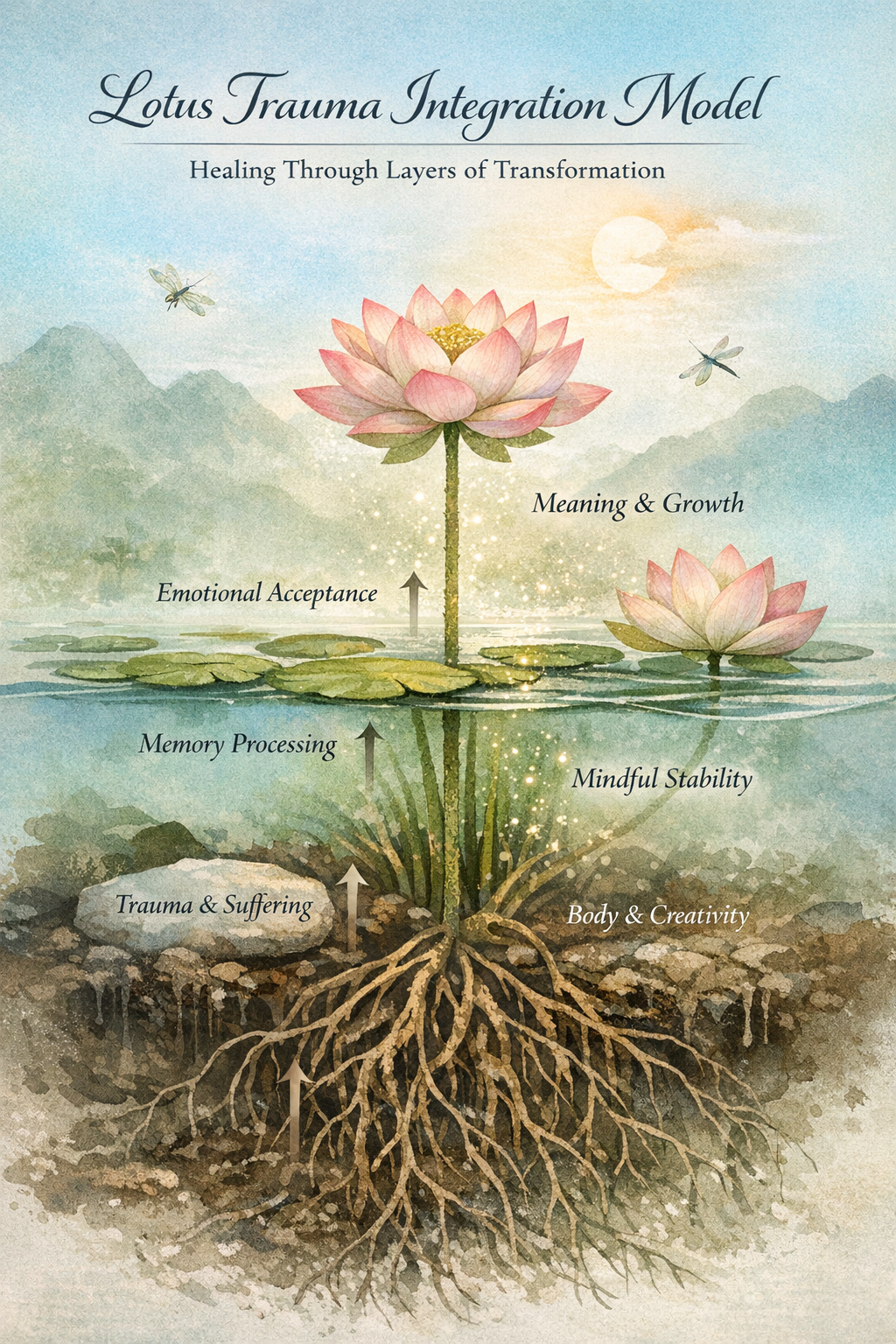
Ai Kihara’s original model
In many Eastern traditions, the lotus flower is a symbol of growth and transformation. The lotus grows from muddy water, yet it blooms into something beautiful and strong. In a similar way, human beings can grow and develop wisdom even through difficult life experiences.
Naikan reflection supports this process by helping people gently examine their relationships and life events. Instead of focusing only on pain or loss, individuals are encouraged to see the full picture of their experiences — including the support they received, the care they gave, and the lessons they learned.
Through this reflective process, many people begin to recognize their resilience, compassion, and capacity for growth.
From this perspective, trauma does not define a person’s life. Rather, with reflection, understanding, and support, even difficult experiences can become part of a deeper journey toward meaning, healing, and personal transformation.
Like the lotus rising from the mud, healing can emerge from the most challenging circumstances.
If you would like to learn more about Naikan therapy or experience this reflective practice, please feel free to contact Hana Counselling.