
Beyond Post-Traumatic Growth:The Mud Lotus Trauma Integration Model as a Framework for Reality Preservation and Meaning Integration

Abstract
Trauma recovery models have traditionally focused on symptom reduction, including the treatment of PTSD, nervous system regulation, and cognitive restructuring. However, many traumatic experiences occur within complex social and structural contexts such as interpersonal violence, gaslighting, legal conflict, and social invalidation. Existing trauma theories often insufficiently conceptualize the role of these reality-based challenges within the recovery process.
This paper introduces the Mud Lotus Trauma Integration Model, a conceptual framework that understands trauma recovery as a multi-stage and multi-layered process. The model proposes five stages of recovery—Mud, Survival, Surface Break, Lotus Bloom, and Sky Perspective—organized within a three-layer architecture: the Reality Layer, the Self Restoration Layer, and the Transcendent Layer.
A central contribution of this model is the concept of Reality Defense, which describes the psychological and behavioral processes through which individuals preserve their perception of reality when confronted with social denial, coercion, or institutional pressure. This dimension is largely absent in existing trauma recovery frameworks.
The Mud Lotus Model extends beyond the widely recognized Post-Traumatic Growth framework by conceptualizing recovery not only as growth but as a process involving reality preservation, restoration of being, and transcendent meaning integration. Drawing on insights from trauma psychology, Eastern philosophy, and clinical practice, the model offers an integrative perspective on trauma recovery.
Keywords
Keywords
trauma recovery
reality defense
trauma integration
meaning integration
Zen-informed psychology
post-traumatic growth
1. Introduction
Traditional trauma treatment models have largely focused on symptom reduction, including the treatment of PTSD, nervous system regulation, and cognitive restructuring.
For example, trauma research has emphasized the role of bodily memory and neurophysiological responses in trauma recovery (van der Kolk, 2014), and stage-based models of trauma recovery have been proposed (Herman, 1992).
However, many traumatic experiences occur within complex social realities that include violence, gaslighting, legal conflict, and social invalidation. These experiences involve not only psychological distress but also struggles within social and institutional realities.
Existing trauma theories often do not sufficiently conceptualize this dimension of lived reality.
The purpose of this paper is to propose the Mud Lotus Trauma Integration Model, a framework that conceptualizes trauma recovery through three interconnected dimensions:
Reality, Being, and Meaning.
2. Mud Lotus Trauma Integration Model
The Mud Lotus Model conceptualizes trauma recovery as a five-stage developmental process:
Mud
Survival
Surface Break
Lotus Bloom
Sky Perspective
These stages are organized within a Three-Layer Architecture, consisting of the Reality Layer, the Self Restoration Layer, and the Transcendent Layer.
Model Definition
The Mud Lotus Trauma Integration Model is a conceptual framework that describes trauma recovery as a developmental process involving the preservation of reality, the restoration of being, and the integration of meaning across three interconnected layers of experience—social reality, internal selfhood, and existential understanding.
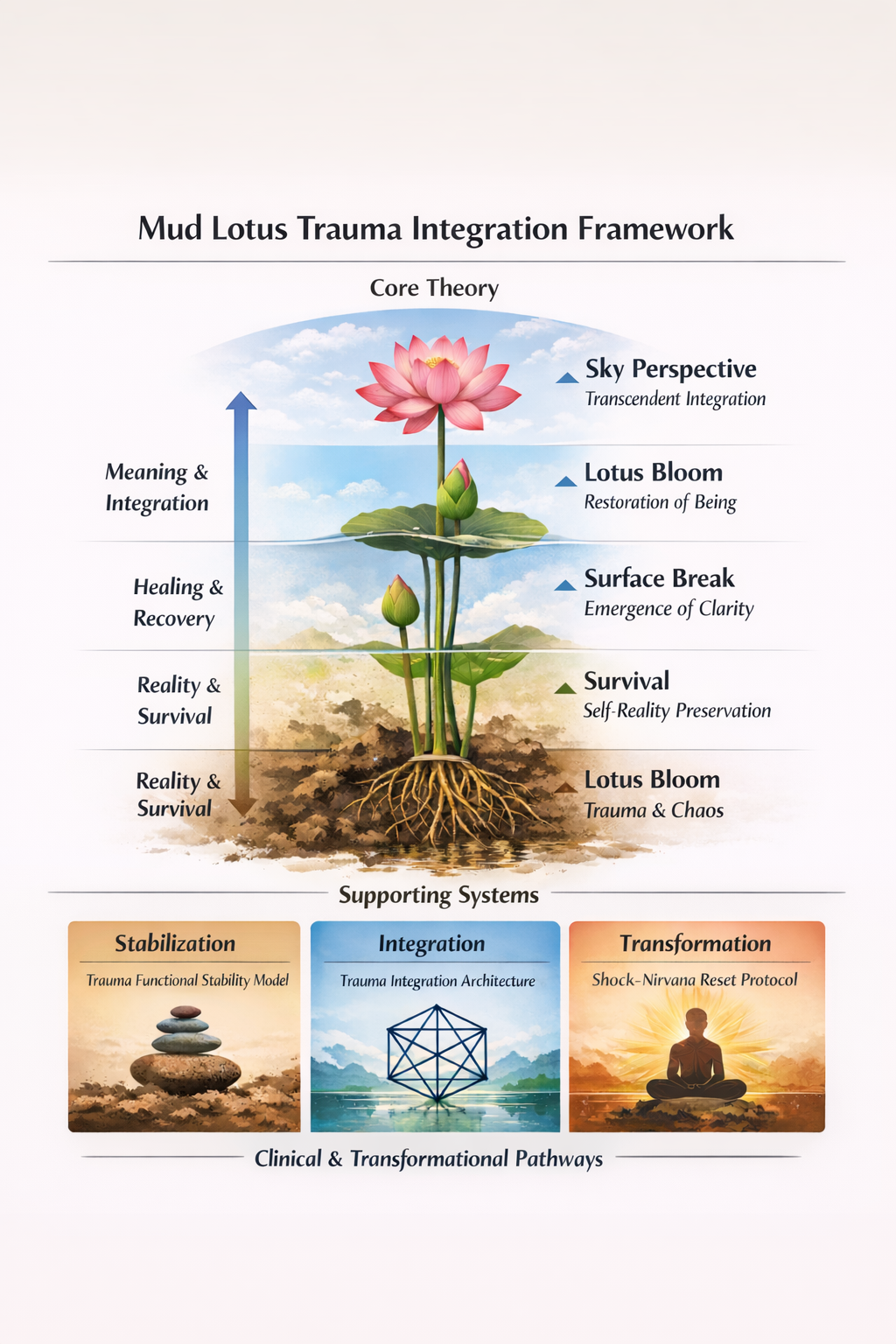
Figure 1. Mud Lotus Trauma Integration Framework.
This framework illustrates the developmental process of trauma recovery as conceptualized in the Mud Lotus Trauma Integration Model. The model proposes a progression from Mud (trauma and chaos) through Survival, Surface Break, and Lotus Bloom, culminating in Sky Perspective, where traumatic experiences are integrated into reflective awareness and meaning. The framework also highlights supporting clinical pathways, including stabilization, integration, and transformational processes.
Core Theory Statement
Mud Lotus Principle
Trauma → Reality Preservation → Restoration of Being → Transcendent Integration
The Mud Lotus Principle of Trauma Integration
The Mud Lotus Trauma Integration Model proposes that trauma recovery is not solely a process of symptom reduction or post-traumatic growth, but a developmental process involving the preservation of reality, the restoration of being, and the integration of meaning.
In many traumatic contexts, individuals face not only internal psychological distress but also external pressures that challenge their perception of reality, including social denial, coercion, and institutional invalidation. The Mud Lotus Model therefore introduces the concept of Reality Defense, describing the psychological and behavioral processes through which individuals preserve their sense of reality during traumatic conditions.
Within this framework, trauma recovery unfolds across three interconnected dimensions:
Reality Preservation – maintaining one's perception of reality and identity in the face of external invalidation
Restoration of Being – recovering internal stability, bodily safety, and personal dignity
Transcendent Integration – integrating traumatic experiences into a broader framework of meaning and reflective awareness
These processes correspond to the five stages of the Mud Lotus Model.
The conceptual trajectory of trauma integration can therefore be summarized as:
Trauma → Reality Preservation → Restoration of Being → Transcendent Integration
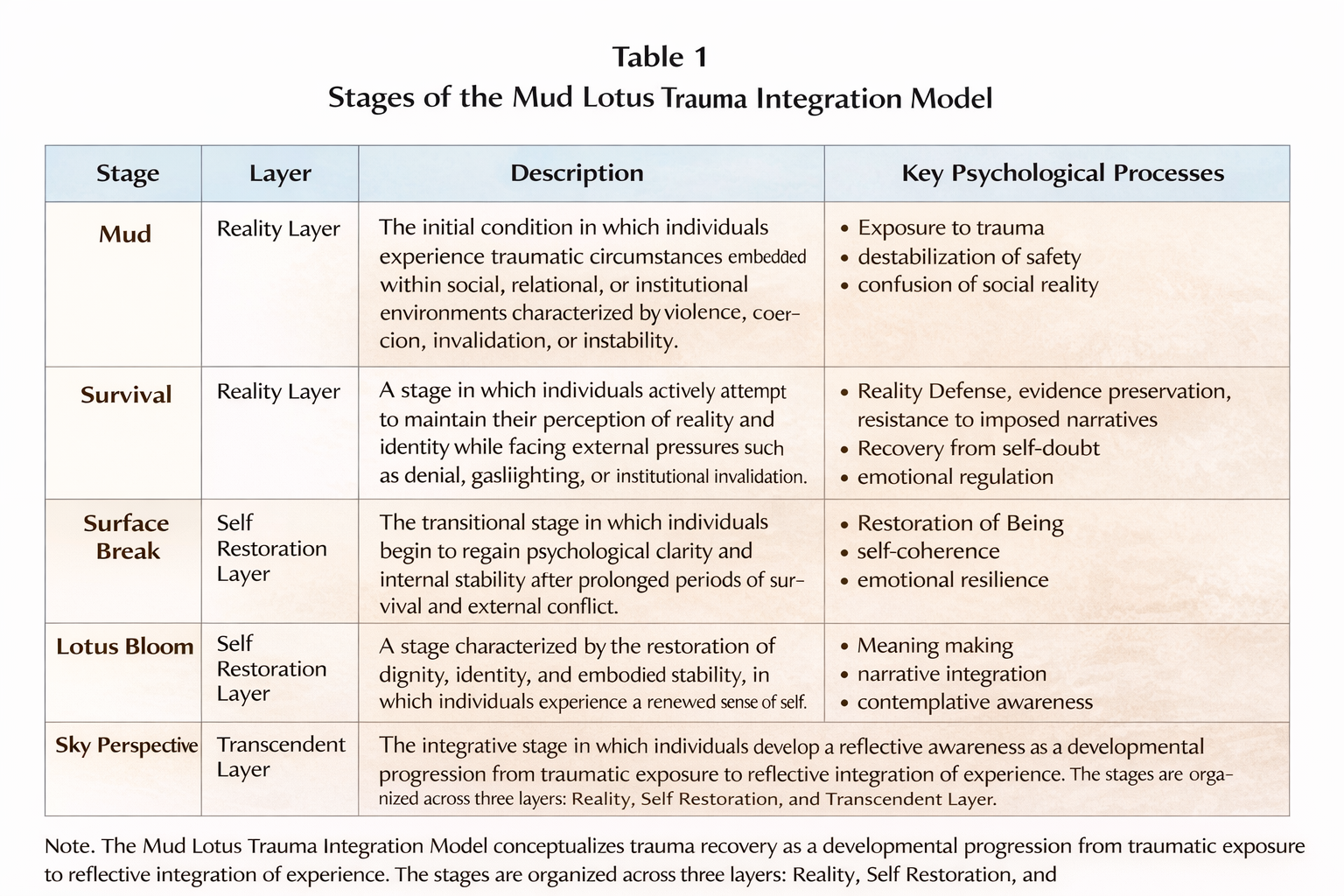
Table 1
Stages of the Mud Lotus Trauma Integration Model
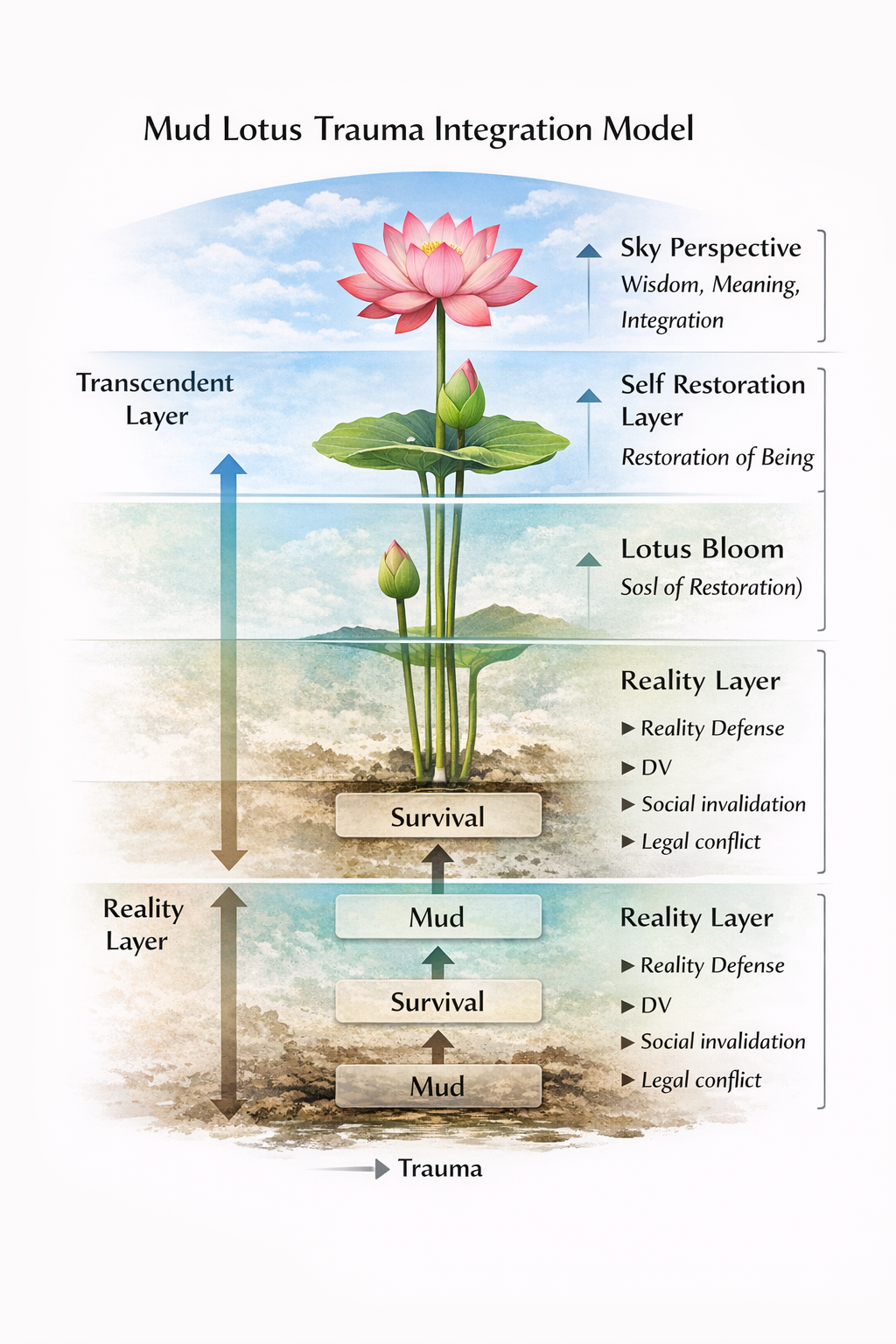
Figure 1
The Mud Lotus Trauma Integration Model
Note. The model conceptualizes trauma recovery as a five-stage developmental process across three interconnected layers: Reality, Self Restoration, and Transcendent Integration.
3. Three-Layer Architecture
Reality Layer
The Reality Layer includes the stages Mud and Survival.
Individuals may encounter conditions such as:
interpersonal violence
gaslighting
institutional barriers
legal conflict
social invalidation
During this stage, individuals struggle to preserve their sense of reality.
The central mechanism within this layer is Reality Defense, which refers to the psychological and behavioral processes through which individuals maintain their perception of reality despite external invalidation.
Reality Defense as a Theoretical Contribution
The concept of Reality Defense represents a central theoretical contribution of the Mud Lotus Trauma Integration Model.
Traditional trauma theories have primarily focused on internal psychological processes such as emotional regulation, cognitive restructuring, and physiological responses to stress (van der Kolk, 2014; Porges, 2011). While these perspectives have significantly advanced trauma research, they often emphasize intrapsychic mechanisms and symptom-focused recovery processes.
However, many traumatic experiences occur within social and institutional contexts in which individuals must also confront external challenges to their perception of reality, including gaslighting, social invalidation, legal disputes, or institutional pressure.
In such contexts, trauma recovery involves not only internal healing but also the preservation of one's perception of reality in the face of external denial.
The concept of Reality Defense describes the psychological and behavioral processes through which individuals maintain their sense of reality and identity despite attempts by external actors or systems to impose alternative narratives.
These processes may include:
evidence preservation
resistance to imposed narratives
maintenance of autobiographical coherence
affirmation of personal reality
By introducing Reality Defense as a theoretical construct, the Mud Lotus Model expands trauma recovery theory beyond internal psychological regulation and incorporates the role of social reality and epistemic validation within the recovery process.
This perspective suggests that trauma integration often requires both internal restoration and external reality preservation, particularly in situations where individuals experience prolonged social invalidation or systemic conflict.
Self Restoration Layer
The Self Restoration Layer includes the stages Surface Break and Lotus Bloom.
During this stage individuals experience:
recovery from self-doubt
restoration of emotional and bodily safety
recovery of personal dignity
Research on trauma recovery emphasizes the role of physiological and emotional regulation in healing processes (Porges, 2011; Ogden et al., 2006).
Within the Mud Lotus Model, this phase represents Restoration of Being.
Transcendent Layer
The Transcendent Layer includes the stage Sky Perspective.
At this stage traumatic experiences are integrated into broader systems of meaning and reflection.
Psychological research has emphasized the importance of meaning-making processes in recovery from adversity (Park, 2010; Neimeyer, 2001).
The Mud Lotus Model refers to this process as Transcendent Integration.
4. Zen Perspective
The Mud Lotus Model draws inspiration from the Zen metaphor of the lotus emerging from the mud, symbolizing awakening arising from suffering (Suzuki, 1956).
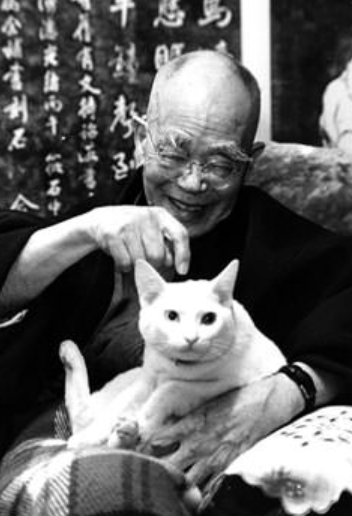
Daisetsu Suzuki (1870-1966)
Zen traditions also emphasize contemplative awareness, the ability to observe one's life from a reflective perspective.
The stage of Sky Perspective reflects this contemplative awareness, allowing individuals to simultaneously recognize:
the self who suffered
the self who recovered
the self who observes the journey
5. Comparison with Post-Traumatic Growth
The theory of Post-Traumatic Growth was developed by Richard Tedeschi and Lawrence Calhoun (Tedeschi & Calhoun, 2004).
PTG identifies positive psychological changes following trauma, including stronger relationships, new possibilities, personal strength, appreciation of life, and spiritual change.
The conceptual structure of PTG can be summarized as:
Trauma → Growth
Limitations of PTG
PTG primarily describes outcomes of growth, while offering limited explanation of recovery processes or struggles with external reality.
Structural Difference
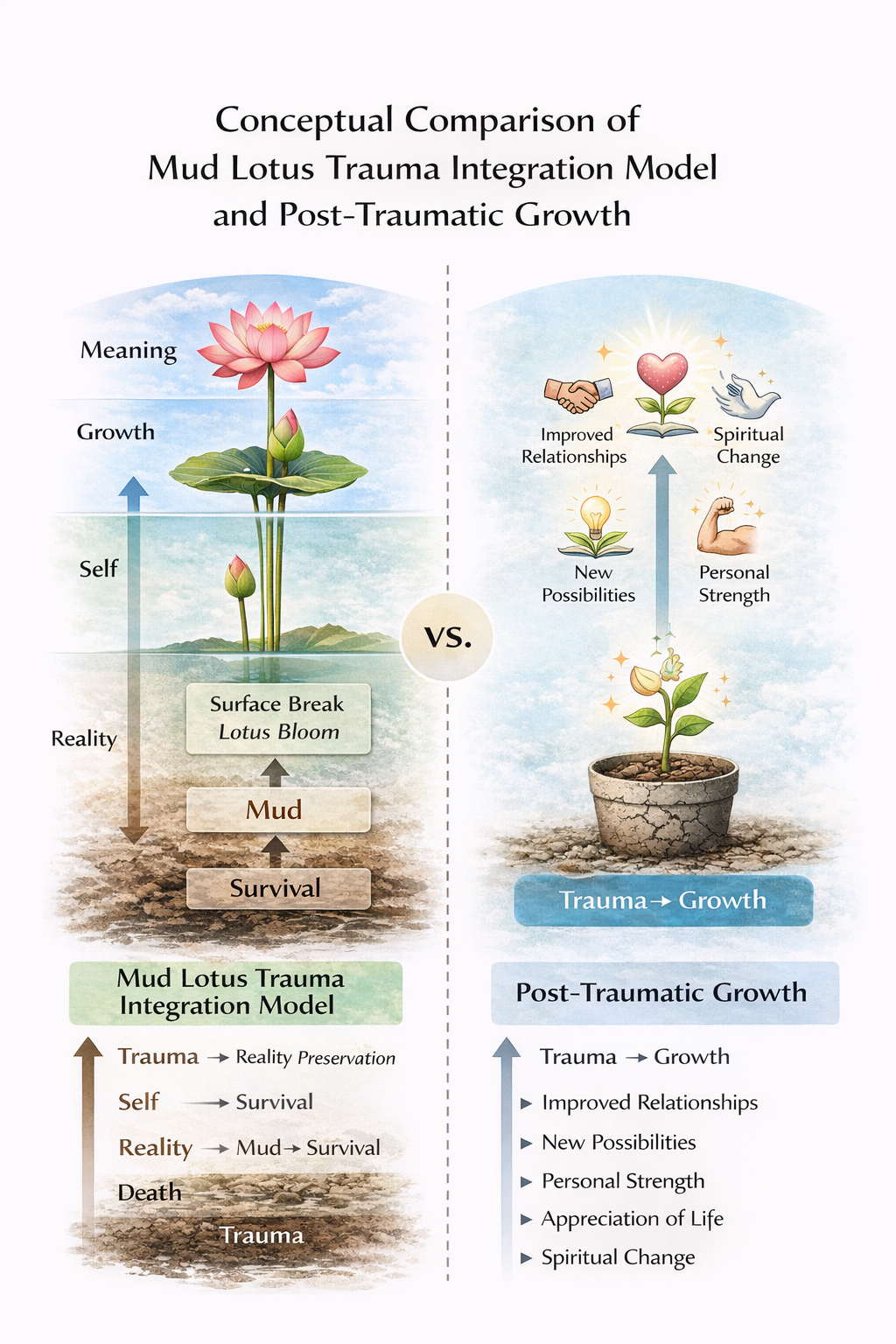
The Mud Lotus Model proposes the following trajectory:
Trauma → Reality Preservation → Restoration of Being → Transcendent Integration
6. Integrative Perspective
The Mud Lotus Trauma Integration Model integrates three domains:
trauma psychology
Eastern philosophy
clinical practice
Existential psychology has long emphasized the role of meaning-making in recovery from suffering (Frankl, 1963).
7. Conclusion
The Mud Lotus Trauma Integration Model conceptualizes trauma recovery as a multi-layered process involving reality stabilization, restoration of being, and integration of meaning.
By incorporating social reality, existential recovery, and contemplative awareness, the model expands trauma theory beyond symptom reduction and post-traumatic growth. The Mud Lotus Trauma Integration Model contributes to trauma theory by integrating social reality, existential recovery, and reflective awareness within a unified framework of trauma integration.
8. Future Research Directions
Future research may further examine the theoretical and clinical implications of the Mud Lotus Trauma Integration Model.
First, empirical studies may explore whether the five developmental stages proposed by the model—Mud, Survival, Surface Break, Lotus Bloom, and Sky Perspective—can be observed in longitudinal trauma recovery processes. Qualitative research may also investigate how individuals describe transitions between these stages in their lived experiences of recovery.
Second, the concept of Reality Defense may be examined within contexts where individuals experience prolonged social invalidation, including situations involving gaslighting, institutional conflict, or legal disputes. Future studies may investigate how reality preservation processes interact with psychological resilience and identity stability.
Third, clinical research may explore how therapeutic interventions can support movement across the three layers of the model: the Reality Layer, the Self Restoration Layer, and the Transcendent Layer. Such research may examine how stabilization, integration-oriented therapies, and contemplative practices contribute to trauma recovery.
Finally, interdisciplinary research may explore connections between the Mud Lotus Model and related frameworks in existential psychology, narrative psychology, and contemplative traditions. These perspectives may provide further insight into how meaning-making and reflective awareness contribute to long-term trauma integration.
Together, these research directions may contribute to the empirical development of the Mud Lotus Trauma Integration Model and expand understanding of trauma recovery as a multidimensional process involving reality preservation, restoration of being, and meaning integration.
References (APA 7)
Frankl, V. E. (1963). Man’s search for meaning. Beacon Press.
Herman, J. L. (1992). Trauma and recovery. Basic Books.
Neimeyer, R. A. (2001). Meaning reconstruction and the experience of loss. American Psychological Association.
Ogden, P., Minton, K., & Pain, C. (2006). Trauma and the body. Norton.
Park, C. L. (2010). Meaning making and adjustment. Psychological Bulletin, 136(2), 257–301.
Porges, S. W. (2011). The polyvagal theory. Norton.
Siegel, D. J. (2010). Mindsight. Bantam.
Suzuki, D. T. (1956). Zen Buddhism. Doubleday.
Tedeschi, R. G., & Calhoun, L. G. (2004). Posttraumatic growth. Psychological Inquiry, 15(1), 1–18.
van der Kolk, B. A. (2014). The body keeps the score. Viking.
© 2026 Hana Counselling Limited
The Mud Lotus Programme, including its structure, written materials, graphics, workbook, educational resources, and associated content, is the intellectual property of Hana Counselling Limited unless otherwise stated.
