
A New Chapter Begins – HANA
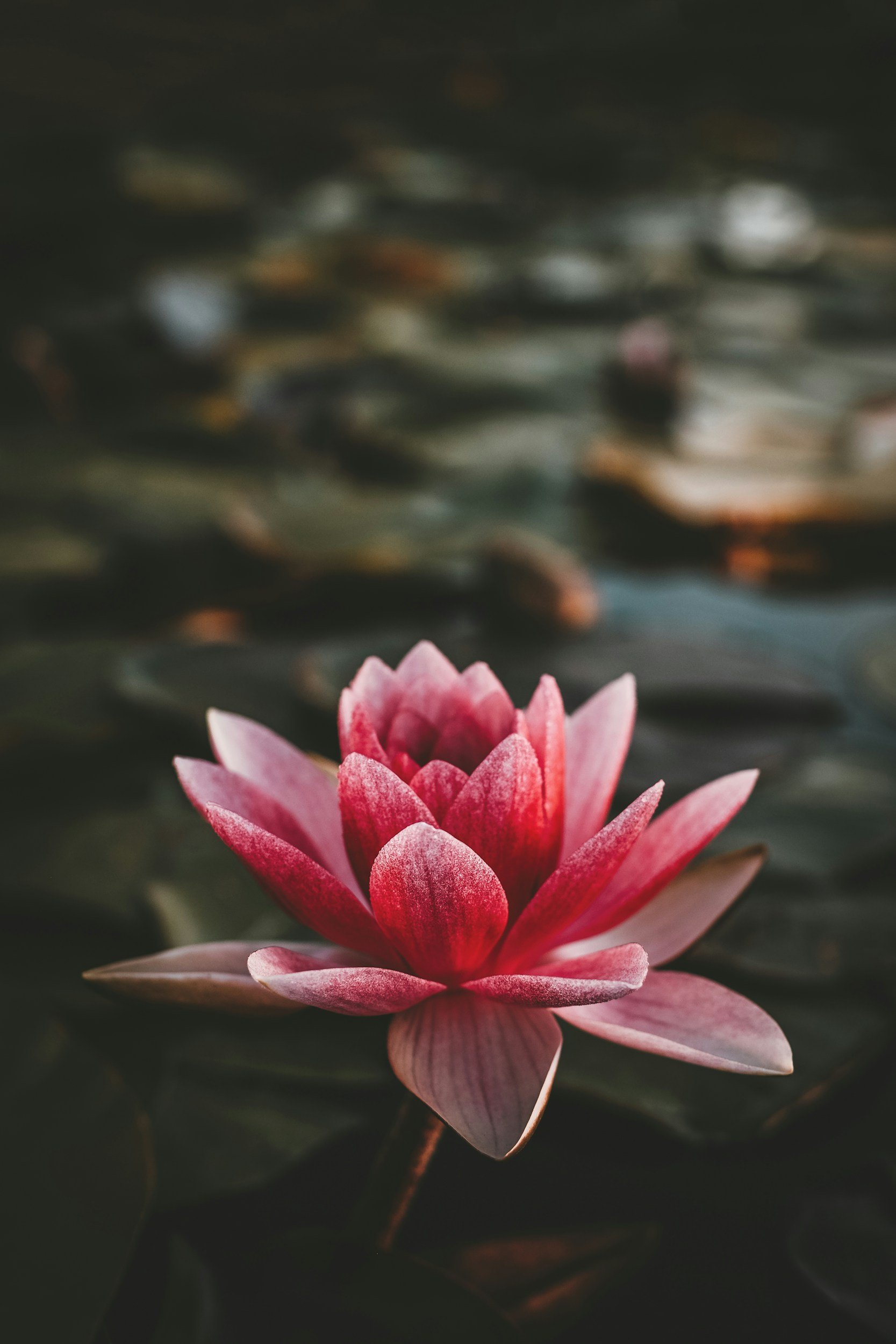
A New Chapter Begins — HANA
1 August 2026
Today marks a new chapter for HANA Counselling and Education Limited.
While our legal company name remains unchanged, our trading name is now simply:
HANA
This is much more than a branding decision.
It represents who we have become, what we believe in, and the future we hope to create together.
To us, HANA is not simply a name.
It is a symbol of love, hope, growth, and the belief that healing flourishes through genuine human connection.
Today, I would like to share the story behind that name.
My Name — Ai
My given name is Ai (愛), the Japanese word for love.
My parents gave me this name with a heartfelt wish: that I would both receive love from others and learn how to love others deeply, and that one day I would come to understand the true meaning of love itself.
For many years, however, I experienced my name as something heavy.
As a child, I often wondered,
"Why would someone give a child such a profound name?"
By the age of five, I was already asking questions that many adults continue to wrestle with throughout their lives.
What is love?
Why do people hurt one another?
Why do we love some people and dislike others?
What makes someone a friend?
What makes a family?
Who am I?
Looking back now, I realise that searching for the meaning of love has quietly shaped my entire life.
It has become the thread connecting every chapter of my journey.
Learning Love Through Life
I was fortunate to grow up surrounded by parents and relatives who embodied compassion in their everyday lives.
They rarely taught me about love through words.
Instead, they taught me through the way they lived.
From them, I learned that love is not simply an emotion.
Love is choosing to care.
Love is making the effort to understand another person.
Love is having the courage to face difficult realities while setting aside as much of our own bias as possible.
Life can be extraordinarily complex.
Sometimes it feels unbearably painful.
Yet within that same world, there are moments of breathtaking beauty.
Moments when one person's kindness brings hope to someone who has almost given up.
Moments when compassion quietly changes another person's life.
Those moments have stayed with me.
As I have grown older, I have come to appreciate my name in a very different way.
Rather than feeling like a burden, it has become a lifelong invitation to continue learning.
Every day, as a mother, researcher, therapist, business owner, and community leader, I continue asking myself the same question:
What does it truly mean to love?
I do not claim to have found all the answers.
What I do know is that I continue learning from the people around me every day.
From my colleagues.
From my clients.
From my mentors.
From the communities I have the privilege to serve.
Their trust has become one of the greatest gifts in my life.
And perhaps that journey of learning is, itself, an expression of love.
HANA — The Most Precious Flower in My Life
I have always loved my own name, Ai, and for many years I wondered whether I might one day give my daughter the same name.
But as time passed, I realised how much weight the word love can carry.
It is a beautiful name, yet it also holds expectations, responsibilities, and questions that can take a lifetime to understand.
When my daughter was born, something unexpected happened.
The moment I held her in my arms, an image appeared in my mind.
Years earlier, while travelling in the Swiss Alps, I had come across a tiny wildflower growing quietly among the mountains.
It was delicate and fragile, yet incredibly resilient.
Small enough to be overlooked, yet beautiful enough to stop me in my tracks.
Looking at my newborn daughter, that memory returned instantly.
I remember thinking,
"She is a flower."
Not because flowers are fragile, but because they quietly bring beauty wherever they bloom.
Flowers do not compete.
They simply grow.
They bring joy without asking for recognition.
People rarely feel unhappy when someone offers them a flower.
That simple thought became the inspiration for her name.
Hana (花) — the Japanese word for flower.
More than anything, I wished for her to live a gentle and peaceful life.
Not a life without challenges, but a life where she would always know that she did not have to face them alone.
I hoped she would wake each morning looking forward to a new day.
That she would enjoy learning at school.
That she would notice the beauty of the sky.
That she would laugh wholeheartedly at small and unexpected moments.
That she would fall asleep each night wrapped in a sense of peace, knowing she had lived a meaningful day.
I hoped she would grow like a mountain wildflower—quietly, naturally, surrounded by others, drawing strength from the community around her.
If life became difficult, I wanted her to know that it was perfectly okay to rest, to seek shelter, and to lean on others until she was ready to bloom again.
Those hopes eventually became much bigger than a name.
On 31 May 2021, I submitted the application to establish my company.
Less than a month later, on 24 June 2021, HANA Counselling and Education Limited was officially registered in New Zealand.
The reason I chose the name HANA was simple.
It carried my hopes for my daughter.
It reflected the values that had shaped my own life.
And it symbolised the future I wanted to help create—a future where people could heal, grow, and flourish together.
Looking back now, I realise that HANA was never just a company name.
From the very beginning, it represented a vision.
A vision that healing is possible.
A vision that communities become stronger when people support one another.
A vision that, even after seasons of hardship, new flowers can bloom.
That vision continues to guide everything we do today.
Five Years of Growth
When HANA Counselling and Education Limited was established in June 2021, it was simply me.
One counsellor.
One business owner.
One small office.
And one dream.
I wanted to create a place where people living with trauma could find safety, understanding, and hope.
Over the following five years, HANA gradually grew.
Alongside my clinical work, I continued postgraduate research at the University of Auckland, deepened my understanding of trauma therapy, and completed advanced professional training, including EMDR.
At the same time, I explored the wisdom of Zen philosophy, Morita Therapy, Naikan Therapy, Dance Movement Therapy, and community-based approaches to wellbeing.
Rather than seeing these as separate disciplines, I began noticing connections between them.
Each perspective illuminated another part of the healing process.
Each experience—whether from research, clinical practice, education, or my own life—contributed another piece to a much larger picture.
Eventually, these pieces came together.
In 2026, they became what is now known as the Mud Lotus Trauma Integration Model.
To me, this model is far more than an academic theory.
It is the integration of thousands of conversations with clients.
The wisdom generously shared by teachers and mentors.
The encouragement of colleagues and friends.
The lessons learned through both joy and hardship.
And the belief that healing is not about erasing suffering, but about discovering meaning and possibility within it.
In March 2026, I published the first paper introducing the Mud Lotus Trauma Integration Model.
Soon afterwards, another question naturally emerged.
How could this knowledge move beyond counselling rooms and academic papers?
How could it become something communities could experience together?
The answer became the Mud Lotus Community Programme.
On 1 August 2026, with support from Sport Auckland, the very first twelve-week Mud Lotus Programme begins.
For me, this is much more than the launch of a programme.
It is the moment when research meets community.
When clinical practice becomes shared learning.
When ideas become lived experience.
Today, HANA is no longer simply a counselling practice.
We now work alongside local councils, government agencies, community organisations, schools, charities, and volunteers to create programmes that strengthen wellbeing, connection, and resilience.
Most importantly, HANA is no longer my journey alone.
It belongs to every facilitator, volunteer, collaborator, mentor, supporter, and client who has walked alongside us.
Nothing we have achieved has been accomplished by one person.
Everything has grown through relationships.
And for that, I remain deeply grateful.
Looking Towards the Future
Today, our legal company name remains unchanged.
HANA Counselling and Education Limitedcontinues to be our registered company.
However, from 1 August 2026, our trading name becomes simply:
HANA
The reason is straightforward.
We have grown beyond counselling alone.
Today, HANA represents counselling.
Education.
Research.
Community development.
Creative wellbeing programmes.
Partnerships with public organisations.
Support for children, families, and communities.
And many new possibilities yet to come.
The name HANA reflects not only who we are today, but also who we hope to become.
As for me, I am still learning.
As a mother.
As a therapist.
As a researcher.
As a business owner.
As a community leader.
Every day brings new lessons, new challenges, and new opportunities to grow.
HANA is not a finished story.
It is an ongoing journey.
We hope to continue building bridges between people, communities, cultures, and knowledge.
We hope to contribute, even in small ways, to a society where people feel seen, valued, and connected.
Finally, I would like to express my heartfelt gratitude to everyone who has supported HANA throughout these past five years.
Thank you for believing in our vision.
Thank you for walking beside us.
We look forward to continuing this journey together.
From HANA to Mud Lotus
Why the Lotus?
Do we really have to wait until we are fully healed before we begin living?
This simple question lies at the heart of the Mud Lotus philosophy.
The name HANA means flower in Japanese.
A flower symbolises beauty, hope, gentleness, and new life.
Yet throughout my years as a trauma therapist, there was one flower that continued to return to my mind above all others.
It was the lotus.
Unlike many flowers, the lotus grows from the mud.
It does not reject the mud.
It does not wait for the mud to disappear.
It blooms because of it.
To me, this reflects something profound about the human experience.
Trauma Does Not Simply Disappear
Trauma is rarely something that can simply be erased.
We cannot rewrite the past.
Yet after years of walking alongside people living with trauma, I began to notice something remarkable.
People do not begin living only after their suffering has disappeared.
Instead, they begin living while carrying their suffering.
One small step at a time.
As they move forward, something begins to change.
Their relationship with themselves changes.
Their relationship with others changes.
Their relationship with life itself begins to change.
This process is what I describe as Trauma Integration.
Rather than allowing trauma to define identity, healing becomes a process of integrating painful experiences into a coherent and meaningful sense of self.
A Different Way of Understanding Healing
The Mud Lotus Trauma Integration Model has been shaped through the integration of many perspectives, including EMDR, cognitive behavioural approaches, neuroscience, Morita Therapy, Naikan Therapy, and Zen philosophy.
Among these influences, two Zen concepts have been particularly meaningful.
Kansho (観照)—observing experience without immediate judgement.
Riken (離見)—stepping back to see ourselves and our lives from a broader perspective.
Together, these perspectives invite a different question.
Are we truly suffering because of our emotions themselves?
Or are we suffering because of the meanings we have attached to our experiences?
An event.
The body's automatic emotional response.
Our conscious feelings.
Our beliefs, shaped throughout life.
The interpretations we create.
Mud Lotus does not seek to eliminate these experiences.
Instead, it encourages us to observe them with curiosity and compassion.
Through observation, new understanding naturally begins to emerge.
Rediscovering Time
In recent years, another question has become increasingly important in my work.
The question of time.
Trauma changes not only how we remember.
It changes how we experience time itself.
During a flashback, the body does not experience a memory as something long ago.
It experiences it as something happening now.
At the same time, the future can begin to feel impossibly distant.
People often ask,
"How many more years will I have to endure this?"
"When will I finally recover?"
Trauma pulls the past into the present while pushing the future further away.
This observation inspired the idea of Mud Lotus Time.
We naturally think of ourselves as walking toward the future.
But perhaps the future is also quietly moving toward us.
The present is not simply a point between the past and the future.
It is the place where two movements meet—
our journey toward tomorrow,
and tomorrow's journey toward us.
This moment is where life is lived.
Growth Begins Before Healing Is Complete
One of the central ideas behind the Mud Lotus philosophy is this:
Growth does not begin after suffering ends.
Growth begins while suffering is still unfolding.
Many models of recovery describe healing as a sequence.
Trauma.
Recovery.
Growth.
Mud Lotus offers another perspective.
Healing and growth are not separate stages.
They often unfold together.
People do not wait until every wound has healed before making meaningful decisions.
They rebuild relationships while still grieving.
They rediscover purpose while still feeling uncertain.
They contribute to their communities while still carrying pain.
Living itself becomes part of healing.
Recovery is therefore not simply the reduction of symptoms.
It is an ongoing process of reconnecting with reality, observing experience with compassion, discovering new meaning, and choosing the next step—even when life remains difficult.
This is why the lotus is such a powerful symbol.
A lotus does not wait until the mud disappears before it begins to grow.
It grows within the mud.
Perhaps human beings do as well.
HANA and Mud Lotus
HANA and Mud Lotus are not two separate stories.
They are two expressions of the same philosophy.
HANA represents the belief that every person carries the possibility of blooming.
Mud Lotus reminds us that blooming is still possible, even when life begins in the mud.
One speaks of hope.
The other speaks of courage.
Together, they express the vision that continues to guide everything we do.
Through research.
Through clinical practice.
Through education.
Through community partnerships.
And through every meaningful human connection.
At HANA, we do not believe that life begins after healing.
We believe that living itself becomes part of healing.
And perhaps that is the quiet lesson the lotus has been teaching us all along.
It does not wait for perfect conditions.
It simply begins to bloom.
Thank you for walking this journey with us.
May we continue to learn from one another, support one another, and keep blooming—wherever life may find us.
With gratitude,
Ai
