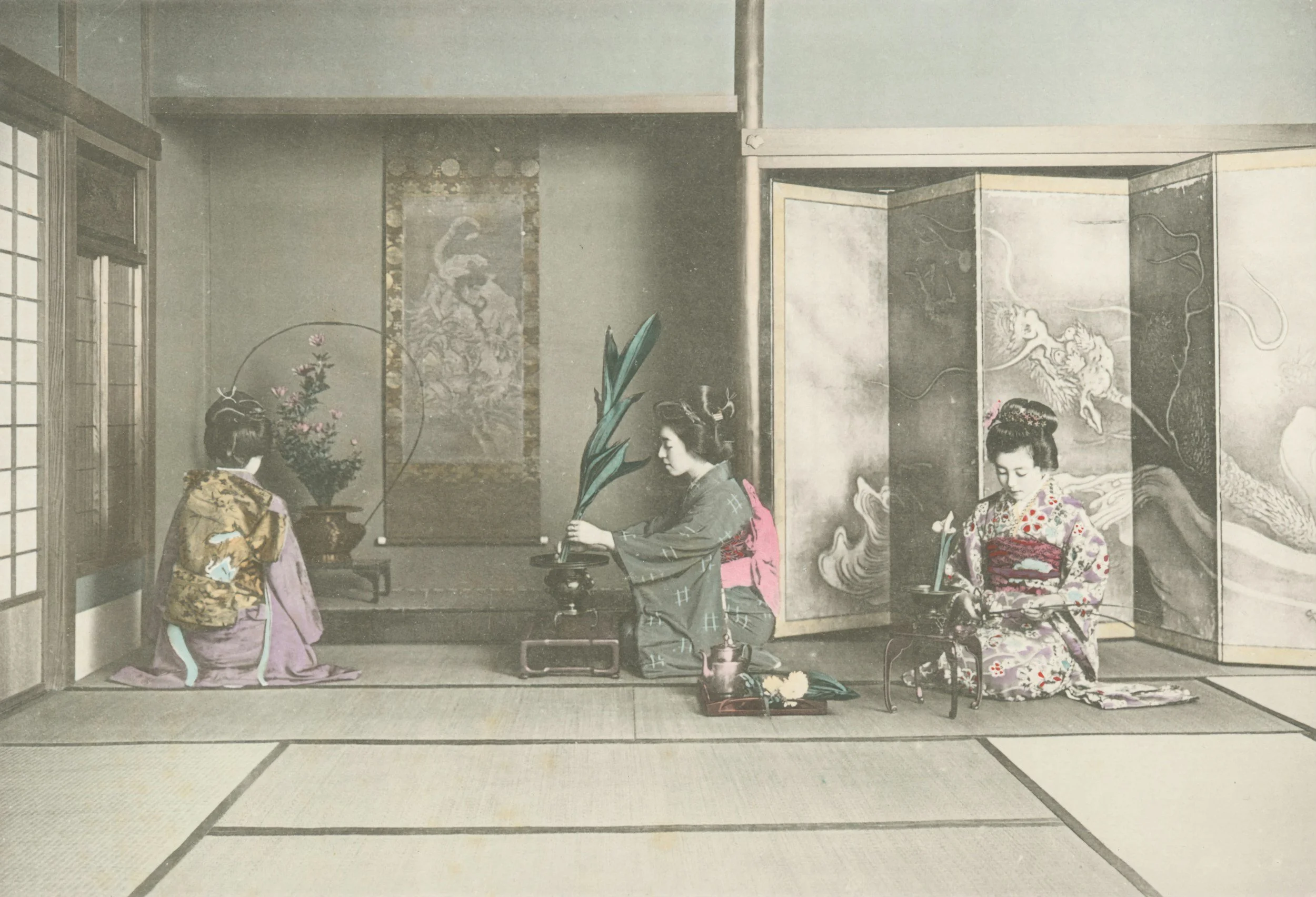
Bushido in Everyday Life: Self-Mastery, Resilience, and Living with Grace
Chapter One: What Is Bushidō?
The History of Hagakure and Its Modern Interpretation
Introduction
Hagakure is often associated with the famous phrase:
“The way of the warrior is found in death.”
However, this phrase is frequently taken out of context, leading to misunderstandings about what Hagakure truly represents.
Throughout my life, I have studied Zen, psychotherapy, trauma recovery, and human growth. When I revisited Hagakure through these lenses, I did not encounter a philosophy of death. Instead, I encountered a profound question:
How should we live?
Hagakure is not merely a historical text for samurai.
It offers timeless insights into how we relate to ourselves, how we relate to others, and how we approach life itself.
In this chapter, I would like to explore the historical background of Hagakure and examine the philosophy of Bushidō that lies at its core.
What Is Hagakure?
Hagakure is a Bushidō text compiled in the early eighteenth century. It is formally known as Hagakure Kikigaki (“Things Heard in the Shade of Leaves”).
The work consists of the recorded teachings of Yamamoto Tsunetomo, a former samurai of the Saga Domain, written down by Tashiro Tsuramoto (Yamamoto, 1979).
Japan at that time was in the Edo period.
The large-scale warfare of the Sengoku era had ended, and many samurai no longer experienced battle firsthand.
As peace became established, a new question emerged:
What does it mean to be a samurai?
How should a samurai live in an age without war?
How can one maintain honour, discipline, and purpose when the sword is rarely drawn?
Hagakure emerged as one response to these questions.
What Was Bushidō?
Today, when people hear the word Bushidō, they often think of:
Discipline
Mental toughness
Loyalty
Combat
Victory
Yet when one reads Hagakure, many of its teachings are surprisingly ordinary and deeply human.
Courtesy.
Relationships.
Keeping one’s word.
Fulfilling responsibilities.
Lifelong learning.
Integrity.
In this sense, Hagakure is not simply a manual for warriors.
It is a guide for living.
Bushidō is not merely a collection of martial skills.
Rather, it is a philosophy of self-discipline, responsibility, and respect for others.
The True Meaning of “The Way of the Warrior Is Found in Death”
Perhaps the most famous phrase in Hagakure is:
“The way of the warrior is found in death.”
At first glance, this may sound like a glorification of death.
To modern readers, it can even seem dangerous.
However, this is not how I understand it.
To me, the phrase means:
Do not live solely for self-preservation.
Every day we worry:
What if I fail?
What if people dislike me?
What if I lose something?
What if I embarrass myself?
These fears are natural.
All human beings experience uncertainty and anxiety.
Yet I believe Hagakure encourages us not to let fear dictate our actions.
It asks us to act according to our values, even when fear is present.
This is not a philosophy of seeking death.
Rather, it is a philosophy of moving beyond attachment, fear, and self-protection in order to live authentically.
Since the 1990s, I have worked in areas involving justice, crime, trauma, and recovery.
Over the years, I have witnessed countless moments when people revealed their deepest values.
I have seen individuals choose self-preservation at the expense of others.
I have seen situations where fear, personal gain, or survival instincts resulted in harm to innocent people.
I have also witnessed individuals who risked their own safety to protect another human being.
I do not judge either group.
My role has always been to support people through their struggles.
Yet these experiences have led me to believe that one aspect of Hagakure is the courage to act beyond self-interest.
Reading Hagakure in the Modern World
Hagakure was written more than three hundred years ago.
Naturally, modern society differs greatly from Edo-period Japan.
Not every idea can be applied directly to contemporary life.
Yet the essential questions remain remarkably relevant.
How should we live?
How do we grow?
How do we relate to others?
How do we relate to ourselves?
Through my studies of Zen and trauma recovery, I have spent many years reflecting on these questions.
What I have come to understand is that Hagakure is not fundamentally about defeating others.
It is about engaging in an honest dialogue with oneself.
Rather than searching for enemies outside ourselves, it invites us to examine what lies within:
Fear.
Anger.
Attachment.
Pride.
Arrogance.
To me, this is where the true spirit of Hagakure resides.
My Personal Understanding of Hagakure
Historically, the word Hagakure is often interpreted as “hidden beneath the leaves,” reflecting the ideal of serving quietly without seeking recognition (Yamamoto, 1979).
Yet personally, I have always imagined something different.
I imagine the underside of a leaf.
The unseen side.
The hidden side.
The side beneath appearances.
The hidden meaning behind words.
The hidden motivations behind actions.
The hidden stories within people.
Throughout my professional and personal life, I have learned that truth is rarely found on the surface.
When I was younger, I worked with someone I simply could not get along with.
No matter what I suggested, it was rejected.
Nothing seemed acceptable.
At the time, my father gave me advice that profoundly changed my life.
He said:
“You are only looking at the surface.”
“Look at his heart.”
“Look at his back.”
“Look at his shadow.”
“Then look at your own heart.”
“Look at your own back.”
“Speak with your own shadow.”
“If you interpret feedback as a personal attack, you are not yet a professional.”
His words shocked me.
Gradually, I began asking this colleague about his family, his interests, and his life experiences.
I brought small gifts when visiting his workplace.
We started having conversations beyond work.
Slowly, my perspective changed.
He was not someone trying to undermine me.
He was a professional who deeply loved his family and cared passionately about his work.
My understanding changed completely.
At the same time, I began a deeper practice of self-reflection.
I visited temples.
I practised Zen meditation.
I sought guidance from Buddhist monks.
One day, while leaning against a large tree within a temple grounds, I looked upward.
For the first time, I truly noticed the underside of the leaves.
Large branches.
Small branches.
Individual leaves.
Each one unique.
None overlapping.
Yet together they formed extraordinary harmony.
At that moment, I recognised my own immaturity.
I realised how quickly I had judged another person.
I realised how little I had truly understood.
For me, that was a moment of Hagakure.
In time, that colleague and I developed a close friendship that extended to our families.
A Message for Modern Readers
As I read Hagakure, I do not see it as a relic of Japanese history.
I see it as a source of timeless human wisdom.
Bushidō is not about domination.
It is not about defeating others.
It is about cultivating oneself.
Respecting others.
Keeping one's promises.
Continuing to learn.
Living with integrity.
And when necessary, having the courage to draw the sword.
Equally important, it is knowing when to return the sword to its scabbard.
My parents often told me:
“When you find yourself in a desperate situation, close your eyes.”
“Bring your awareness to your lower abdomen.”
“Take a deep breath.”
“Do not think about the past.”
“Do not think about the future.”
“See only this moment.”
“Do not blame others.”
“Do not despair.”
“Do not blame yourself.”
“Simply understand the situation.”
“There is always a way forward.”
“That is wisdom.”
“Become a candle flame that does not go out, even in a storm.”
“And when the sword has been drawn, return it to the scabbard.”
There have been moments in my own life when I have done exactly that.
At first, closing my eyes felt frightening.
Yet over time, through practice and discipline, it became a source of peace.
And from that peace emerged clarity.
Zen contains a phrase called Taishi Ichiban (“Great Death, Great Awakening”), referring to the profound insight that can emerge when everything seems lost (Suzuki, 1959).
Even in our darkest moments, we possess the capacity for wisdom.
At the heart of Bushidō lies what the Japanese call kokkishin—the spirit of self-mastery.
Not conquering others.
But confronting oneself.
This idea resonates deeply with modern psychology, personal growth, and the trauma recovery work that has shaped much of my professional life.
In the next chapter, we will explore the concept of kokkishin and examine the relationship between humility, self-reflection, and personal growth.
References
Nitobe, I. (2001). Bushido: The soul of Japan. Dover Publications. (Original work published 1900)
Suzuki, D. T. (1959). Zen and Japanese culture. Princeton University Press.
Yamamoto, T. (1979). Hagakure: The book of the samurai (W. S. Wilson, Trans.). Kodansha International. (Original work published 1716)
Yamada, K. (2009). The gateless gate: The classic book of Zen koans. Wisdom Publications.
Chapter Two: Reflections on Kokkishin (Self-Mastery)
The Connection Between Humility and Personal Growth
What Is Kokkishin?
As I read Hagakure, one concept that resonated deeply with me was kokkishin, often translated as self-mastery or the spirit of overcoming oneself.
The Japanese characters literally mean:
To overcome oneself.
The true opponent is not outside us.
The true opponent is within.
However, I do not interpret this idea as suppressing emotions, enduring suffering in silence, or constantly criticizing oneself.
Nor do I believe it means living under relentless self-discipline.
Instead, I see kokkishin as a commitment to understanding oneself deeply and developing the wisdom not to be controlled by one's emotions, impulses, or desires.
Every day we experience anger, anxiety, jealousy, fear, pride, and the desire for approval.
There is nothing wrong with having these emotions.
The challenge arises when we become ruled by them.
We may overreact to criticism.
We may avoid challenges because we fear failure.
We may attack others in an attempt to prove that we are right.
Most of us have experienced moments like these.
Kokkishin is not about eliminating emotions.
Rather, it is the ability to pause and ask:
“What is happening inside me right now?”
It is the capacity to turn inward with honesty and awareness.
Emotions and the Tea Room
When strong emotions arise, I often sit in meditation and enter into a dialogue with my emotions, my mind, and my inner self.
I believe nothing in this world is entirely without purpose.
Because of this, I have come to understand emotions as something that exists for a reason.
Interestingly, human beings tend to hold onto unpleasant emotions longer than pleasant ones.
From an evolutionary perspective, this may be related to humanity's survival during prehistoric hunter-gatherer life, when remaining alert to danger increased the chances of survival.
Whenever I experience difficult emotions such as anger or sadness, I imagine a small traditional Japanese tea room.
Inside that tea room sit four guests:
Myself.
My emotions.
My mind.
My inner self.
We share tea together.
No one speaks.
Soft sunlight filters through the shōji screens.
The scent of tatami fills the room.
Steam rises gently from the iron kettle.
The aroma of tea lingers in the air.
I feel the warmth of the tea bowl in my hands.
I hear the quiet sound of fabric moving.
Birds sing somewhere in the distance.
Occasionally, the breeze moves through a bamboo grove, creating a gentle rustling sound.
Within that space, something begins to shift.
My understanding of the emotion deepens.
My thoughts become clearer.
The situation begins to make sense.
Eventually, the emotions and the inner self quietly leave the tea room.
What remains is gratitude.
My heart feels warm.
What I am describing may resemble what modern psychology refers to as mindfulness and the observing self (Kabat-Zinn, 1994).
Kokkishin and Humility
Psychology offers a concept known as the Quiet Ego (Bauer & Wayment, 2008; Wayment & Bauer, 2017).
The Quiet Ego is not about diminishing oneself.
Nor is it about exaggerating one's importance.
Rather, it is a way of being that respects both oneself and others while remaining committed to growth.
I see many similarities between this concept and the kokkishin described in Hagakure.
For me, humility forms the foundation of self-mastery.
Humility is not making oneself small.
It is not a lack of confidence.
In many ways, it may reflect a stable and healthy sense of self-esteem.
True humility is the understanding that:
“I still have more to learn.”
This reminds me of the Morita Therapy concept of arugamama—accepting reality as it is (Morita, 1998).
The moment we believe we already know enough, growth begins to stop.
By contrast, those who continue learning continue growing.
Regardless of age.
Regardless of experience.
Regardless of status.
I like to call this:
Curious Humility.
Curiosity is more than a desire for knowledge.
It is the courage to understand oneself.
It is the willingness to understand others.
It is the strength to acknowledge one's assumptions and limitations.
Humility requires courage.
And perhaps, at its deepest level, humility is an expression of love.
The First Arrow and the Second Arrow
Buddhism teaches the concept of the First Arrow and the Second Arrow.
The First Arrow represents the unavoidable difficulties of life.
Pain.
Loss.
Disappointment.
Illness.
Conflict.
These experiences are part of being human.
The Second Arrow represents the suffering we create through our reactions to those events.
Anger.
Resentment.
Attachment.
Judgment.
Stories we tell ourselves about what happened.
Blaming others and becoming trapped in disappointment are easy responses.
Like shooting an arrow, they release energy quickly.
Kokkishin asks something different of us.
It invites us to turn inward.
When we are hurt, we often create a Second Arrow of anger or attachment and direct it toward others.
Yet when we pause and carefully examine the First Arrow, something changes.
We begin to see more clearly.
Should we speak?
Should we act?
Should we draw the sword?
Or should we reflect more deeply before responding?
This is where wisdom begins.
Beginner's Mind and Self-Mastery
Zen contains a teaching known as Beginner's Mind (Shoshin) (Suzuki, 1970).
Beginner's Mind does not mean being inexperienced.
Rather, it means maintaining the openness and curiosity of a beginner, even after many years of practice.
To me, this is deeply connected to kokkishin.
Remaining aware of our assumptions requires humility.
And humility allows curiosity to remain alive.
For many years I have studied Zen, psychotherapy, and trauma recovery.
Along the way, I discovered something surprising.
Growth may not be about adding more and more to ourselves.
It may be about understanding ourselves more deeply.
One thing I have consistently noticed is that truly professional people often resemble curious children.
They enjoy learning.
They ask questions.
And perhaps most importantly, they are comfortable saying:
“I don't know.”
Summary of Chapter Two
For me, kokkishin is not about judging oneself harshly.
In fact, excessive judgment can become a form of arrogance.
Nor is self-mastery about defeating others.
It is about meeting oneself honestly.
It is the willingness to continually ask:
“How do I wish to live?”
without becoming consumed by fear, anger, pride, or attachment.
True strength is not found in endless struggle.
True strength lies in knowing when to act.
Knowing when to let go.
And then continuing to walk forward with calmness and dignity.
In the next chapter, we will explore how kokkishin can be practiced in everyday life and how the principles of Bushidō can become part of our daily actions.
References
Bauer, J. J., & Wayment, H. A. (2008). The psychology of the quiet ego. American Psychological Association.
Kabat-Zinn, J. (1994). Wherever you go, there you are: Mindfulness meditation in everyday life. Hyperion.
Morita, S. (1998). Morita therapy and the true nature of anxiety-based disorders. State University of New York Press.
Suzuki, S. (1970). Zen mind, beginner's mind. Weatherhill.
Wayment, H. A., & Bauer, J. J. (2017). The quiet ego: Motives for self-other balance and growth in relation to well-being. Journal of Happiness Studies, 18(3), 881–896.
Chapter 3: What Is True Strength?

Courage Not to Fight and the Practice of Letting Go
True Strength Is Choosing Not to Fight
The Bushidō I learned from my parents and relatives was never about winning.
True strength was, rather, the ability not to fight.
It was the ability not to step into someone else's ring.
It was the wisdom to avoid unnecessary conflict.
And it was the practice of not comparing oneself with others.
When I was younger, I believed strength meant power.
Knowledge.
Status.
Winning.
Never losing.
As I grew older and met people from many walks of life, my understanding gradually changed.
Truly strong people do not fight unnecessarily.
They do not need to make themselves look bigger than they are.
They do not attack others without cause.
And they are not controlled by their emotions.
At the same time, I was taught that there are moments when one must draw the sword.
However, drawing the sword is not about continuing to wound another person.
If the sword is drawn, it must eventually be returned to its sheath.
That, too, is Bushidō.
It took me many years to understand this lesson.
When people become consumed by anger, they revisit the same event again and again.
They continue blaming others.
They become attached to victory and defeat.
They repeatedly dig up the past.
Perhaps self-mastery is the ability not to be consumed by such anger and attachment.
There are times when we must set boundaries.
Times when we must protect ourselves.
Times when we must raise our voices.
But that does not mean attacking endlessly afterward.
It means allowing something that has ended to truly end.
This, I believe, is the essence of hōge—letting go of attachment.
And within that letting go, I find true strength.
Impermanence and Letting Go
One of the most important lessons I learned in Zen came from watching the sky.
One day, I was looking at a cloud drifting across the horizon.
It was so beautiful that I instinctively stretched out my hands toward it.
I wanted it to stay.
I wanted it to stop moving.
A monk standing nearby smiled and said,
“Ai-chan, clouds do not stop.”
“Even this beautiful cloud is moving.”
“Everything is impermanent.”
At the time, I did not fully understand.
As I moved through life, however, the meaning became clearer.
Joy does not last forever.
Sadness does not last forever.
Success does not last forever.
Failure does not last forever.
People change.
Societies change.
We ourselves continue changing.
Because of this, we need not cling too tightly.
Letting go is not the same as giving up.
It is the wisdom of accepting change.
This perspective reflects the Buddhist and Zen understanding of impermanence (mujō), which has been central to Eastern philosophy for centuries (Suzuki, 1956).
Form Is Emptiness and Trauma Recovery
In Buddhism there is a famous phrase:
“Form is emptiness; emptiness is form.”
(Shiki soku ze kū, kū soku ze shiki.)
I do not claim to be a scholar of Buddhist philosophy.
However, my personal understanding is this:
What appears fixed is often not fixed at all.
Anger is not permanent.
Fear is not permanent.
Grief is not permanent.
In trauma therapy, I sometimes witness a profound moment when a client says:
“I thought this pain would stay with me forever, but something has changed.”
Whenever I hear those words, I am reminded of shiki soku ze kū.
Trauma is a natural response of the brain and nervous system to overwhelming experiences (van der Kolk, 2014).
Yet trauma memories are not frozen forever.
Through healing, integration, and support, transformation becomes possible.
For this reason, I often see “form is emptiness” not as a denial of reality, but as a reminder that change remains possible.
The Strength of Yawara
My parents often told me:
“Being soft does not simply mean being kind.”
“Yawara means adaptability.”
The character jū in judo is often translated as gentleness, but its deeper meaning is flexibility.
Life is constantly changing.
Because of that, rigid thinking can become a trap.
There is no single answer that fits every situation.
Sometimes we move forward.
Sometimes we step back.
Sometimes we wait.
Sometimes we speak.
Sometimes we draw the sword.
Sometimes we return it to the sheath.
To me, this is one of the deepest forms of strength.
My parents embodied this principle.
If they saw a stray animal in need, they acted immediately.
If a friend was about to lose housing, they began preparing a room that same day.
Not next week.
Not after extensive planning.
Now.
I saw in them the spirit of yawara.
The ability to respond appropriately to the reality of the moment.
The ability to translate compassion into action.
That, I learned, is true kindness.
Trauma Recovery and Centeredness
Throughout my career, I have worked alongside survivors of trauma and crime.
One lesson has remained consistent.
When people are hurt, they naturally search for a cause.
Someone else is responsible.
Society is responsible.
The circumstances are responsible.
Or sometimes:
I am responsible.
Everything is my fault.
The inner self begins attacking the real self.
Of course, genuine injustice and harm do exist.
Yet recovery eventually brings us to a different question:
“How do I want to live from this point forward?”
As I studied neuroscience, psychology, EMDR, Naikan, Morita Therapy, and other approaches, I began to notice a connection between this question and the concept of self-mastery found in Hagakure.
One of the most moving moments in trauma therapy occurs when a client begins seeing trauma as part of the past rather than something that is happening now.
Triggers may still exist.
Memories may remain.
Yet PTSD symptoms no longer dominate daily life.
This is not merely symptom reduction.
It is integration.
Past, present, and future begin to reconnect.
Memory becomes integrated.
Thought and emotion become integrated.
The body no longer reacts as though danger is occurring in the present moment.
Trauma ceases to be an ongoing threat and becomes part of one's life story (Shapiro, 2018; Siegel, 2020).
I believe trauma recovery is fundamentally the process of returning to one's center.
I call this Centeredness.
In martial arts, it may be described as moving from the hara or dantian.
In Zen, it may be called living in the present moment.
In psychology, it may be described as regulation and integration.
Trauma pulls us away from our center.
We become trapped in the past.
We fear the future.
We are swept away by anger, anxiety, or despair.
Healing is the process of returning home to ourselves.
I often imagine two martial artists facing each other in a dojo.
Their primary task is not defeating one another.
Their first task is finding their own center.
When they do, the battlefield itself becomes calmer.
Self-mastery does not mean ignoring injustice.
It does not mean accepting abuse.
It does not mean endless forgiveness.
Rather, it means reclaiming authorship of one's own life.
And in that process, I believe we discover one of the deepest meanings of Bushidō.
Chapter Summary
To me, true strength is not about winning.
Nor is it about fighting endlessly.
True strength is knowing when not to fight.
It is knowing when to draw the sword.
And knowing when to return it to the sheath.
It is understanding impermanence.
It is understanding that all things change.
It is developing the flexibility to respond wisely to life.
Trauma recovery follows the same principle.
Healing is not about defeating someone else.
It is about returning to one's center.
At the heart of that journey lies self-mastery.
And surrounding that center are the enduring wisdom traditions of Bushidō and Zen.
In the next chapter, we will explore how self-mastery can be practiced in everyday life.
References
Kabat-Zinn, J. (1994). Wherever you go, there you are: Mindfulness meditation in everyday life. Hyperion.
Shapiro, F. (2018). Eye movement desensitization and reprocessing (EMDR) therapy: Basic principles, protocols, and procedures (3rd ed.). Guilford Press.
Siegel, D. J. (2020). The developing mind (3rd ed.). Guilford Press.
Suzuki, D. T. (1956). Zen Buddhism: Selected writings of D. T. Suzuki. Doubleday.
van der Kolk, B. A. (2014). The body keeps the score: Brain, mind, and body in the healing of trauma. Viking.
Williams, M., & Penman, D. (2011). Mindfulness: An eight-week plan for finding peace in a frantic world. Rodale.
Chapter 4: Trauma Recovery and Self-Mastery (Kokki-shin)
Reclaiming the Leadership of Your Own Life
What Is Personal Growth?
In modern society, we often hear the phrase personal growth.
However, personal growth is not about becoming better than someone else.
It is not about winning a competition.
It is about growing a little beyond who you were yesterday.
Expanding your perspective a little further.
Becoming a little kinder to others and to yourself.
And developing a deeper understanding of who you are.
I believe growth is a lifelong journey.
To me, personal growth means continuing a dialogue with oneself.
Within that dialogue lies:
Maintaining curiosity
Remaining humble
Continuing to learn
Acknowledging one's limitations
When we become aware of our limitations, the next challenge often reveals itself naturally.
All of these qualities seem deeply connected to kokki-shin—the spirit of self-mastery.
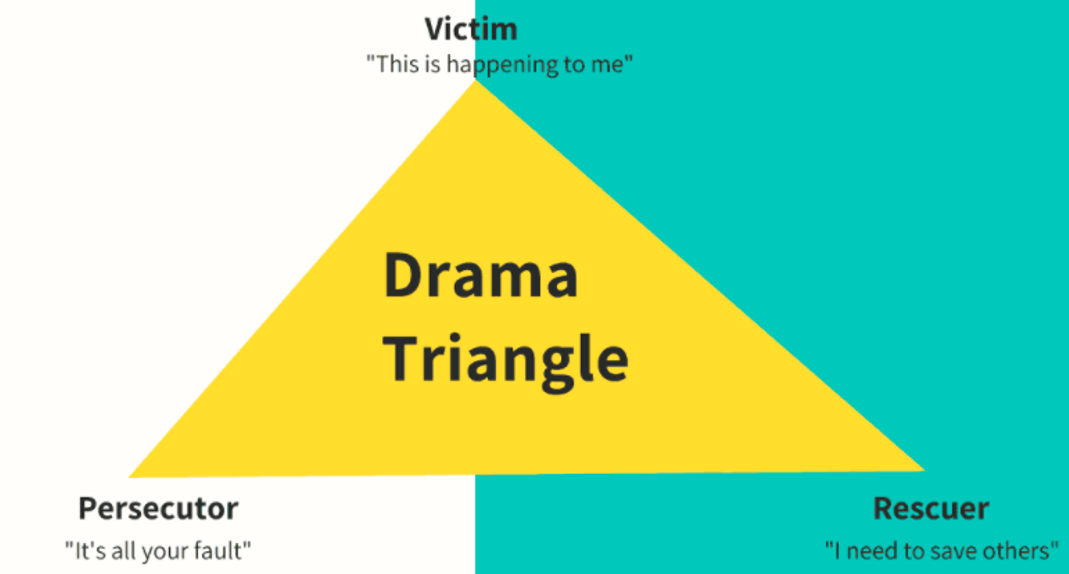
The Drama Triangle
Transactional Analysis and Bushidō
Since 1998, I have worked alongside people in the fields of victim support and trauma recovery.
Among them were individuals who had experienced severe violence, lost loved ones, or endured events that fundamentally changed the course of their lives.
Throughout those years, I repeatedly observed a common pattern.
People in pain often unconsciously enter what is known as the Drama Triangle (Karpman, 1968).
Transactional Analysis describes three primary roles:
Victim
Persecutor
Rescuer
The Victim thinks:
"I have been hurt."
The Persecutor believes:
"Someone else is to blame."
The Rescuer says:
"I must save them."
What is fascinating is that people frequently move between these roles.
Someone who once admired another person may become a victim when disappointed by them.
Someone who tries to help may become a persecutor when things do not go as expected.
And a person viewed as a perpetrator may, in fact, be operating from a deeply wounded sense of victimhood.
Over many years, I have witnessed this dynamic countless times.
Self-Mastery Means Stepping Out of the Drama Triangle
To me, the self-mastery described in Hagakure is not about blaming others.
It is about stepping out of the Drama Triangle.
Instead of asking:
"Why did they do this?"
we begin asking:
"How do I choose to live from this moment forward?"
This question lies not only at the heart of trauma recovery but also at the center of existential psychology (Yalom, 1980).
Stepping out of the Drama Triangle does not mean excusing harmful behavior.
It does not mean ignoring injustice.
It means reclaiming authorship of one's own life.
Reclaiming Agency
Trauma often takes away a person's sense of agency.
A sudden accident.
Violence.
Betrayal.
Loss.
Discrimination.
Bullying.
Unfair circumstances.
In such moments, people may feel:
"There is nothing I can do."
Yet recovery is not about erasing the past.
Nor is it about pretending that painful experiences never happened.
Recovery is about placing the steering wheel of life back into your own hands.
I think of this as reclaiming personal agency.
Psychological research suggests that autonomy and self-determination are essential foundations for well-being and human flourishing (Ryan & Deci, 2017).
Likewise, self-efficacy—the belief that one can take meaningful action—plays a critical role in resilience and growth (Bandura, 1997).
I believe this reflects one of the deepest principles of Bushidō.
Not trying to control others.
Not waiting for others to change.
But choosing how we ourselves will live.
Perhaps that is what self-mastery truly means.
The Professionals I Have Met
Throughout my life, I have worked alongside:
Detectives
Prosecutors
Judges
Lawyers
Physicians
Probation officers
Community leaders
Researchers
Business leaders
Among them, there were individuals whom I felt embodied the spirit of Bushidō.
And they all shared certain qualities.
Characteristics of People with Bushidō
They accept feedback.
They acknowledge their limitations.
They can say, "I don't know."
They seek advice from others.
They follow through on their commitments.
And they never boast.
They rarely speak about:
"Who they know."
"What position they hold."
"How important they are."
Yet when you spend time with them, you naturally notice something.
You can feel the life they have lived.
The effort they have invested.
The values they have chosen to uphold.
I call this dignity.
And to me, that dignity is Bushidō.
Developing Original Ideas
My father often said:
"What others create for you never truly becomes part of you."
"Only what you have thought through yourself becomes your real treasure."
It took me many years to understand what he meant.
We can collect information.
We can borrow knowledge.
But eventually, we must think for ourselves.
We must develop our own philosophy.
We must create our own answers.
In my study of trauma recovery, I continue integrating:
Zen
Bushidō
EMDR
Naikan
Morita Therapy
Neuroscience
Brain Science
Art
Movement
Through this integration, I continue developing my own understanding.
Perhaps this is what my father meant by learning that becomes part of one's flesh and blood.
What Truly Sustains Human Beings
As a therapist,
a researcher,
and simply as a human being,
I have spent many years walking alongside people through suffering and recovery.
Through those experiences, I have learned something important.
What sustains human beings is not power.
It is not status.
It is not money.
What supports people in their darkest moments is:
A meaningful connection.
An act of kindness.
A sentence they never forgot.
Someone who stayed beside them.
Growing up in Japan, I was also exposed to the values of:
Jin (benevolence)
Gi (integrity)
Rei (respect)
On (gratitude and indebtedness)
When I was younger, I sometimes viewed these as old-fashioned concepts.
Yet after witnessing countless stories of suffering and recovery, I have come to believe that these values lie at the foundation of human resilience.
No one lives entirely alone.
We are supported by others.
And we support others in return.
For this reason, I believe the essence of Bushidō is not strength.
It is kindness.
And kindness means:
Practicing benevolence.
Acting with integrity.
Showing respect.
Remembering gratitude.
Not as abstract ideals,
but as everyday actions.
Trauma Recovery and Personal Growth
Trauma recovery follows the same principle.
Recovery is not about defeating someone else.
It is about reconnecting with oneself.
Reconnecting with others.
And rediscovering the capacity to live fully.
Throughout my work as a trauma therapist, I have witnessed deeply moving moments.
Moments when a client begins to see the past as the past.
Triggers no longer overwhelm the body.
PTSD symptoms lessen.
Yet what happens is far greater than symptom reduction.
I often witness integration.
Past, present, and future become connected.
Emotion and cognition become integrated.
Body and memory become integrated.
The trauma gradually transforms from:
"Something that is happening to me now"
into
"Something that happened to me in the past."
Psychology refers to growth beyond recovery as Post-Traumatic Growth (PTG) (Tedeschi & Calhoun, 2004).
The pain does not disappear.
Yet through suffering, people may discover:
A deeper appreciation of life.
Stronger relationships.
Greater gratitude.
Unexpected strengths.
New possibilities.
Such transformations have been documented across many studies (Tedeschi et al., 2018).
I believe the self-mastery described in Hagakure exists along the same continuum.
Self-mastery is not about blaming oneself.
It is about continuing to learn.
Continuing to grow.
And eventually passing what we have received on to future generations and to society.
Chapter Summary
Self-mastery is not about suppressing emotions.
It is not about endless self-denial.
It is about maintaining an ongoing dialogue with oneself.
Not becoming trapped in the role of:
Victim.
Persecutor.
Or Rescuer.
It is about reclaiming authorship of one's own life.
And developing a personal philosophy by which to live.
I believe this is the essence of kokki-shin described in Hagakure.
And perhaps it is a form of Bushidō that remains deeply relevant in the modern world.
References
Bandura, A. (1997). Self-efficacy: The exercise of control. W. H. Freeman.
Frankl, V. E. (2006). Man's Search for Meaning. Beacon Press. (Original work published 1946)
Herman, J. L. (2022). Trauma and Recovery: The Aftermath of Violence—From Domestic Abuse to Political Terror (3rd ed.). Basic Books.
Karpman, S. (1968). Fairy tales and script drama analysis. Transactional Analysis Bulletin, 7(26), 39–43.
Ryan, R. M., & Deci, E. L. (2017). Self-Determination Theory: Basic Psychological Needs in Motivation, Development, and Wellness. Guilford Press.
Tedeschi, R. G., & Calhoun, L. G. (2004). Posttraumatic growth: Conceptual foundations and empirical evidence. Psychological Inquiry, 15(1), 1–18.
Tedeschi, R. G., Shakespeare-Finch, J., Taku, K., & Calhoun, L. G. (2018). Posttraumatic Growth: Theory, Research, and Applications. Routledge.
Yalom, I. D. (1980). Existential Psychotherapy. Basic Books.
Chapter 5: Living Bushidō in Everyday Life
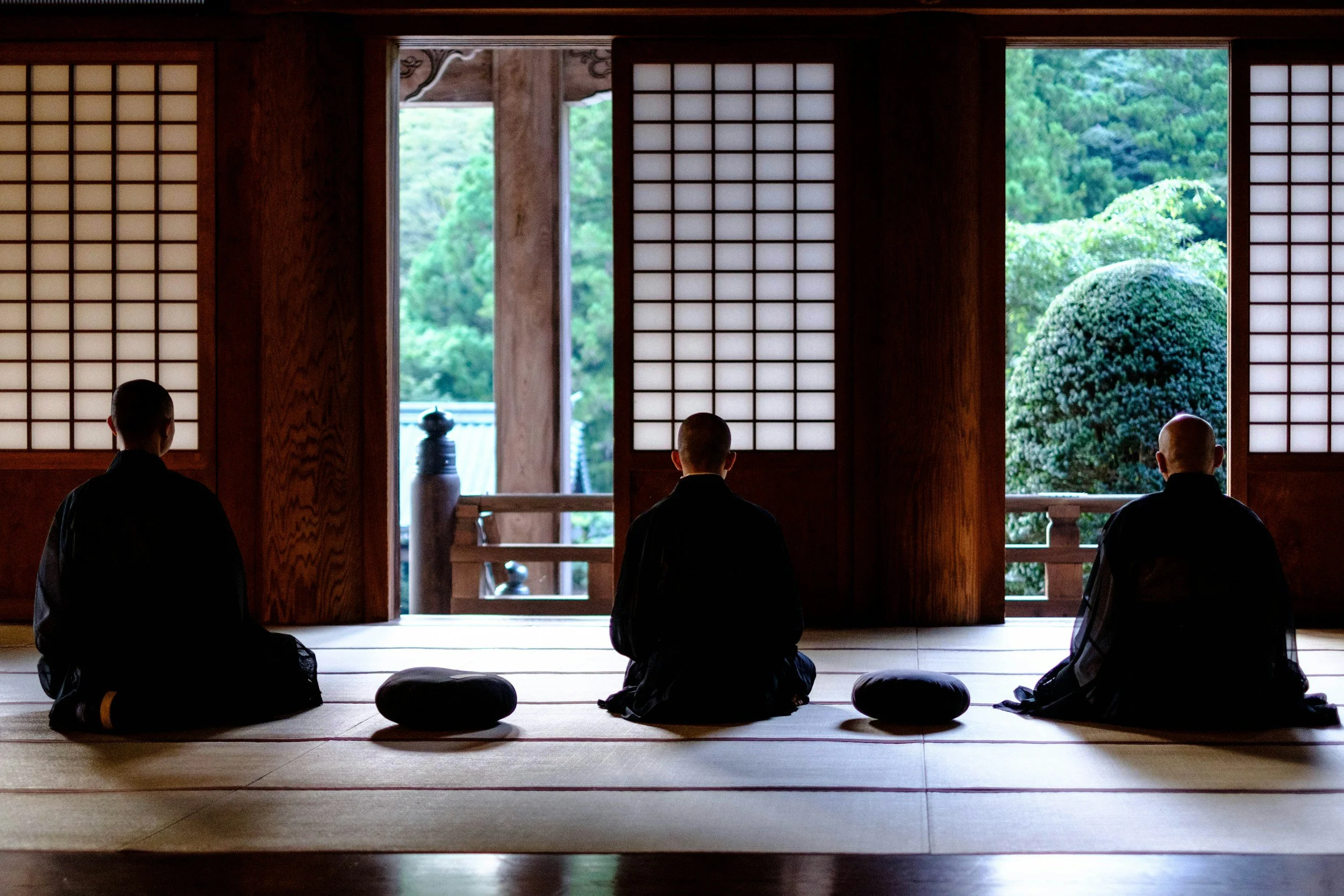
Daily Practices of Self-Mastery
Introduction
The Bushidō described in Hagakure is not a teaching reserved for extraordinary people.
Rather, I believe that self-mastery (kokki-shin) is cultivated through everyday life.
It is not found only in life-changing events, but in the countless small choices and actions we make each day.
Modern psychology also suggests that personal growth and character development emerge not from a single transformative event, but from the accumulation of daily habits and behaviors (Dweck, 2016).
In this chapter, I would like to share several practices that have become important in my own life.
Maintaining Curiosity
One practice I value deeply is maintaining curiosity.
This idea resonates with the psychological concept of the Quiet Ego.
The Quiet Ego does not seek superiority over others or constant competition. Instead, it values learning, growth, and self-transcendence (Bauer & Wayment, 2008).
Children naturally ask:
"Why is the sky blue?"
"How can birds fly?"
As adults, we can continue asking:
"Why?"
"What can I learn from this?"
Curiosity is not merely about acquiring knowledge.
It is about understanding ourselves.
Understanding others.
Understanding the world around us.
I grew up hearing my father say:
"Life and work are eighty percent preparation."
The moment of performance is often brief.
Olympic athletes spend years training for an event that may last only minutes.
Likewise, growth comes through continuous learning, experimenting, and practicing.
Curiosity is one of the foundations of self-mastery.
Even in difficult situations, curiosity allows us to ask:
"How did I arrive here?"
"What changed along the way?"
Instead of becoming trapped by emotion, curiosity helps us observe reality more objectively.
This reflective stance is similar to the observational perspective cultivated in EMDR therapy (Shapiro, 2018).
Straightening One's Collar
As a child, I often heard the word kyōji—a sense of dignity and personal honor.
To "straighten one's collar" is not merely a matter of etiquette.
It means examining one's own words, actions, and attitudes.
When difficulties arise, it is natural to look outward and identify someone else as the cause.
Self-mastery asks a different question:
"What was my part in this?"
This is not self-blame.
It is self-reflection.
My parents taught me that straightening one's collar is an act of respect—not only toward others, but also toward oneself.
Before entering a tea room, one adjusts one's clothing and posture.
This gesture is more than appearance.
It is a sign of respect for the space, for the people present, and for one's own state of mind.
In the same way, we can learn to straighten our thoughts before we speak, act, or judge.
Practicing Self-Discipline
One of the most important lessons I learned from my family was the difference between independence and self-discipline.
Self-discipline is not about doing everything alone.
It is about taking responsibility for one's choices and actions.
Ultimately, it means making one's own decisions.
Psychological research suggests that autonomy is strongly associated with well-being, resilience, and personal growth (Ryan & Deci, 2017).
In my work with survivors of domestic violence, I sometimes meet people who ask:
"What should I do?"
Often, years of control, fear, and manipulation have weakened their trust in their own judgment.
My role is not to make decisions for them.
My role is to help them rediscover their own voice.
Little by little, they begin to trust themselves again.
They begin making choices.
They begin reclaiming agency.
To me, this is self-discipline.
It is not about controlling others.
It is about learning to govern oneself.
Impermanence and Living in the Present
One of the most profound teachings I encountered through Zen and Buddhism is the principle of impermanence.
Joy changes.
Sorrow changes.
Success changes.
Failure changes.
Relationships change.
Life itself changes.
When I was a child, I once stood in a temple garden looking at clouds drifting across the sky.
I reached toward them and thought:
"They are beautiful."
"I wish they would stay."
A monk standing nearby smiled and said:
"Ai-chan, clouds never stay."
"They are already moving."
Then he added:
"Life is the same."
That lesson has stayed with me throughout my life.
Nothing remains exactly as it is.
For this reason, I try not to cling too tightly to the future.
Nor do I remain trapped in the past.
Mindfulness practice similarly teaches us to return to the present moment rather than becoming lost in regrets or fears (Kabat-Zinn, 1994).
Perhaps self-mastery is, in part, the ability to fully inhabit the present.
Yawara: The Strength of Flexibility
My parents often used the word Yawara.
It is the same character used in Judo for "gentleness" or "flexibility."
Yet flexibility does not mean weakness.
It means adaptability.
It means responding appropriately to changing circumstances.
It means moving when movement is needed.
My father used to say:
"A large tree can be cut down."
"But a willow tree survives."
The willow bends with the wind.
Because it does not resist unnecessarily, it does not break.
I have observed something similar in trauma therapy.
When a person's body is rigid with fear and tension, progress is often difficult.
When safety, relaxation, and flexibility emerge, healing tends to move more naturally.
In that sense, flexibility is not the opposite of strength.
It may be one of the highest forms of strength.
Breathing from the Hara-Tanden Breathing
My parents also taught me the practice of breathing from the hara—the center of the body located below the navel.
By bringing awareness to this center and breathing slowly, the mind and body begin to settle.
Thoughts become clearer.
Emotions become calmer.
The body regains balance.
Contemporary neuroscience has increasingly recognized the importance of breathing in regulating the nervous system and restoring emotional balance (Siegel, 2020).
Many times in my life, I have found stability simply by returning to my breath.
Following Through on One's Word
My parents often repeated a simple lesson:
"If you say you will do it, do it."
Integrity is built through small promises.
Trust grows one action at a time.
Following through is not only about commitments to other people.
It is also about commitments we make to ourselves.
Every time we keep a promise to ourselves, we strengthen self-trust.
This, too, is a form of self-mastery.
My parents also taught me something equally important:
When things do not work, the answer is sometimes right beneath your feet.
Failure is not always failure.
Sometimes it is an invitation to change direction, reconsider, and grow.
The difference lies in whether we give up or continue learning.
Not Making Yourself Larger Than You Are
I do not believe there is any need to make oneself appear larger than reality.
The people I most respect rarely boast.
They do not rely on titles.
They do not constantly mention who they know.
They do not seek admiration.
Instead, they continue learning quietly.
Over time, genuine ability reveals itself naturally.
Borrowed authority eventually fades.
Authenticity remains.
To me, self-mastery means not using others for personal gain, not constantly calculating advantages, and not comparing oneself to others.
It means continuing a sincere dialogue with oneself.
Acting with Respect and Integrity
Being right is not enough.
Without respect, even truth can become a weapon.
Respect is not merely a social formality.
It is an acknowledgment of another person's dignity.
To act with both integrity and respect means holding truth and compassion together.
As I have grown older, I have come to believe that the essence of Bushidō is not strength alone.
It is kindness.
And kindness is expressed through:
Benevolence.
Integrity.
Respect.
Gratitude.
Not as abstract ideals, but as daily actions.
Chapter Summary
Self-mastery is not an extraordinary achievement.
It is a daily practice.
It is found in curiosity.
In self-reflection.
In discipline.
In living fully in the present.
In flexibility.
In mindful breathing.
In keeping one's promises.
And in treating others with dignity and respect.
Over time, these small practices become character.
Character becomes dignity.
And dignity becomes a way of life.
For me, Bushidō is not a path for defeating others.
It is a path for cultivating oneself, caring for others, and living with wisdom and grace.
References
Bandura, A. (1997). Self-efficacy: The exercise of control. W. H. Freeman.
Bauer, J. J., & Wayment, H. A. (2008). The psychology of the quiet ego. American Psychological Association.
Brown, B. (2018). Dare to lead. Random House.
Covey, S. R. (2020). The 7 habits of highly effective people. Simon & Schuster.
Dweck, C. S. (2016). Mindset: The new psychology of success. Ballantine Books.
Kabat-Zinn, J. (1994). Wherever you go, there you are: Mindfulness meditation in everyday life. Hyperion.
Ryan, R. M., & Deci, E. L. (2017). Self-determination theory: Basic psychological needs in motivation, development, and wellness. Guilford Press.
Shapiro, F. (2018). Eye movement desensitization and reprocessing (EMDR) therapy: Basic principles, protocols, and procedures (3rd ed.). Guilford Press.
Siegel, D. J. (2020). The developing mind (3rd ed.). Guilford Press.
Chapter 6 Bushido as Cultural Capital
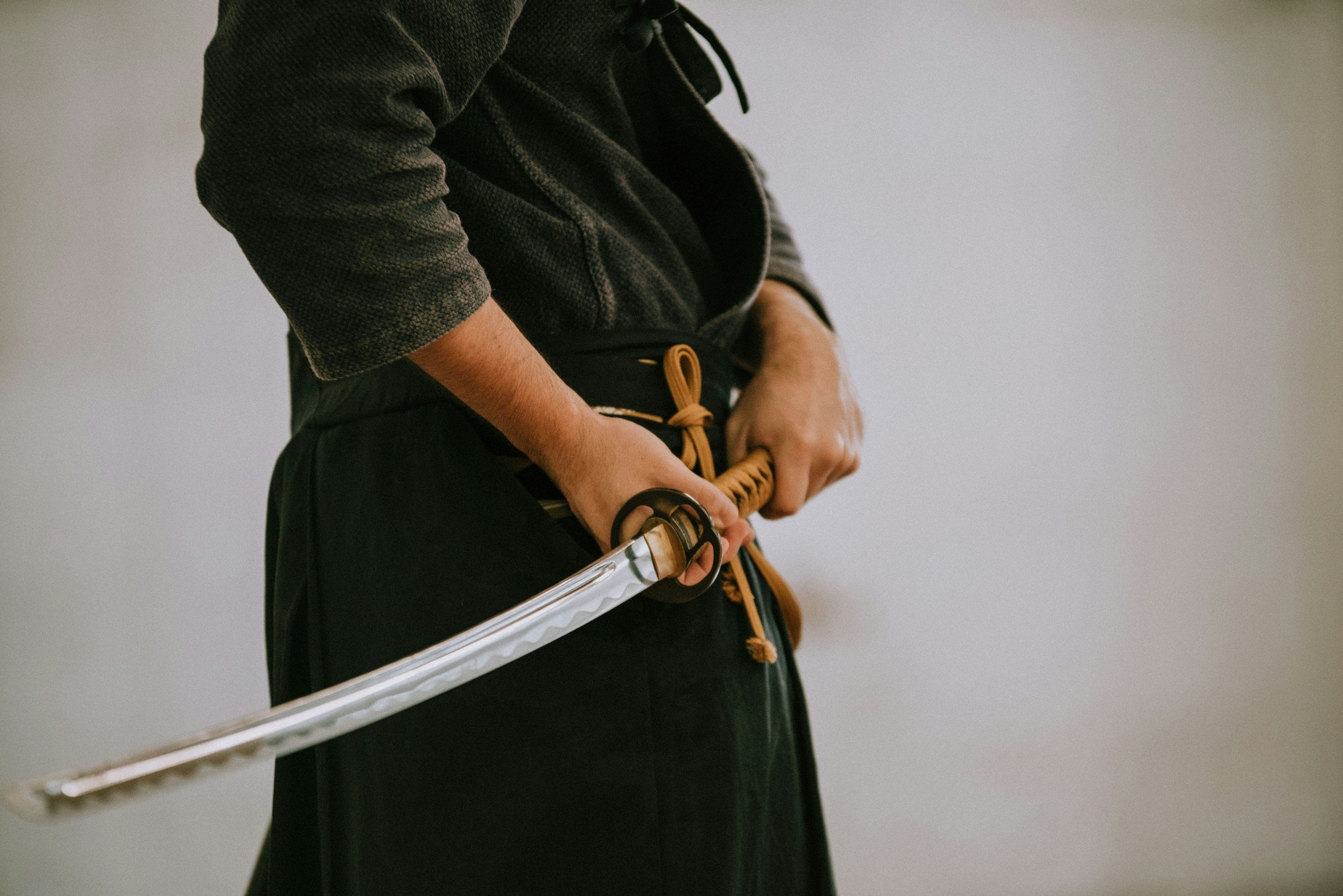
The Invisible Inheritance I Received
I live as an immigrant, a Japanese woman, a mother, a business owner, and a therapist.
Throughout our lives, we hold many different roles.
In front of our parents, we are children.
In front of our children, we are parents.
At work, we are professionals.
At school, we are students.
In our communities, we may be leaders.
Among friends, we are companions.
Human beings carry multiple social identities depending on the context in which they live.
Psychology often speaks of identity, ego, and agency.
Identity refers to our sense of who we are—our values, beliefs, and self-understanding (Erikson, 1968).
Ego refers to our sense of self.
Agency refers to our capacity to think, choose, and act intentionally (Bandura, 2001).
However, I believe there is another important element that shapes our lives.
That element is cultural capital.
Cultural capital is more than education, qualifications, or social status.
It consists of the values, beliefs, habits, attitudes, and ways of living that are passed down through families, communities, and cultures (Bourdieu, 1986).
These invisible inheritances often shape our decisions long before we become consciously aware of them.
The Cultural Capital I Inherited
My name is Love (Ai).
From a young age, I was repeatedly taught what it means to love.
Love means kindness.
Love means strength.
Love means forgiving others.
Love means forgiving yourself.
Love means helping others.
And love means caring for yourself as well.
These teachings became one of the most valuable forms of cultural capital I inherited.
Education as Cultural Capital
I was also raised with a distinctive view of education.
Education was never described simply as acquiring knowledge.
I was taught that higher education, particularly university and postgraduate study, is about creating new ways of thinking.
It is about developing ideas that contribute to society.
Ideas that are useful.
Ideas that are ethical.
Ideas that improve people's lives.
To do this, one must research, read widely, critically evaluate evidence, and gradually develop one's own understanding.
I was taught that this is what true learning means.
Education is also a form of wealth that cannot be taken away.
A delicious meal disappears once it is eaten.
Expensive possessions eventually wear out or break.
But learning remains.
Knowledge becomes part of who we are.
For that reason, I was raised to believe that education is one of the most valuable forms of inheritance a person can receive.
Bushido as Cultural Capital
For me, Bushido is also a form of cultural capital.
It is not about carrying a sword.
It is about remaining curious.
Being self-disciplined.
Following through on one's words.
Treating others with kindness.
Not being controlled by selfish desires.
Recognizing one's limitations.
And continuing to learn throughout life.
These values were passed down to me long before I ever encountered the word "Bushido" in books.
Dignity as Cultural Capital
My parents placed great importance on dignity and character.
Tea ceremony.
Flower arrangement.
Calligraphy.
Table manners.
Greetings.
Thank-you letters.
Hospitality.
The way one sits, stands, speaks, dresses, and interacts with others.
As a child, I often wondered why these details mattered so much.
Looking back, I now understand that they were not simply teaching manners.
They were teaching respect.
One childhood memory remains vivid.
A relative stayed at our home overnight.
The next morning, after they had left, I entered the room and was astonished.
The futon, sheets, and pillows had been folded with extraordinary precision.
Not a single edge was out of place.
The room was immaculate.
My mother looked at me and said,
"This is what it means to leave a place without disturbing it."
"This is what it means to show respect."
That relative was not a stern or formal person.
They were warm, kind, and joyful.
Yet within those small actions, I saw dignity.
I now believe I was witnessing Bushido in everyday life.
Gratitude Through Action
My parents lived in a similar way.
Whenever our family stayed in a hotel, we would wake up unusually early on the final morning.
Together, we cleaned the room.
Under the beds.
Under the tables.
In the corners.
Even the places nobody would see.
As a child, I once asked,
"Why are we cleaning? We're the guests."
My parents replied,
"No. We are being allowed to stay here."
They explained that countless people worked behind the scenes to create a comfortable environment for us.
Therefore, gratitude should be shown through action.
At the time, I did not fully understand.
Now I do.
This was never about cleaning.
It was about expressing appreciation.
Saying thank you matters.
But genuine gratitude is often demonstrated through how we behave.
Leaving a place slightly better than we found it.
Treating shared spaces with care.
Doing the right thing even when nobody is watching.
I believe this, too, is a form of cultural capital.
Connection and the Ensō
My parents often spoke about en—human connection and meaningful relationships.
They taught me that life is shaped by encounters.
Encounters with people.
Encounters with places.
Encounters with opportunities.
When speaking about connection, they often referred to the Zen symbol known as the ensō.
At first glance, it is simply a circle.
Yet within that circle lies profound meaning.
No beginning.
No ending.
Complete and incomplete at the same time.
Individual and interconnected.
As an adult, I began to see the ensō as a reflection of life itself.
None of us exists in isolation.
We are shaped by family, friends, teachers, communities, and countless people we encounter throughout our lives.
Looking back on my career supporting survivors of trauma and crime, I realise that many of the most important events in my life were never planned.
They emerged through relationships.
Through connection.
Through chance encounters.
For that reason, I have come to treasure human connection and to pass forward the kindness I have received.
Wabi-Sabi as Cultural Capital
Another form of cultural capital I inherited is the Japanese concept of wabi-sabi.
It is often described as the beauty of imperfection, simplicity, and transience.
Yet my parents taught me something slightly different.
My mother often said,
"True beauty exists where people do not look."
When I was learning to wear kimono, I wondered why the most beautiful embroidery was often hidden inside garments where nobody could see it.
My mother smiled and replied,
"That is true elegance."
"People with genuine dignity do not need to show everything."
As a child, I did not fully understand.
As an adult, I think I finally do.
True refinement is not about being admired.
It is about living in alignment with one's values.
Not for an audience.
But for oneself.
Imagining Kindness
Whenever I went on school excursions as a child, my mother packed extra lunches.
Sometimes two.
Sometimes three.
Extra chopsticks.
Extra drinks.
Extra snacks.
I complained every time because the bag was heavy.
My mother would simply say,
"Someone may have forgotten their lunch."
"Someone's parents may not have had time to prepare one."
"Someone may need help."
Only much later did I understand.
She was not teaching me about lunches.
She was teaching me about kindness.
Kindness begins before the need appears.
It begins with imagination.
Someone might need help.
Someone might be struggling.
Someone might be alone.
And because of that possibility, we prepare.
Nothing may happen.
The extra food may never be needed.
Yet the act of imagining another person's needs is itself an expression of compassion.
I see Bushido in that kind of kindness.
Cultural Capital and Resilience
Cultural capital cannot be seen.
Yet it profoundly influences how people respond to life's challenges.
Research suggests that resilience is not simply an individual trait.
It is shaped by family, culture, relationships, and community (Ungar, 2021).
Over many years of supporting survivors of trauma and adversity, I have observed that people are often sustained not by wealth or status, but by something less visible.
A phrase learned in childhood.
A value inherited from parents.
Encouragement from a teacher.
A sense of belonging.
A meaningful relationship.
These invisible resources often become anchors during difficult times.
I believe cultural capital is one of the foundations upon which resilience is built.
What Is Your Cultural Capital?
Cultural capital does not need to be extraordinary.
It may come from family traditions.
Religious beliefs.
Community values.
Sport.
Art.
Music.
Or the lessons passed down through everyday life.
Many of these inheritances never appear on a résumé.
Yet they quietly shape who we become.
I believe that understanding our cultural capital helps us understand ourselves.
Identity.
Ego.
Agency.
And cultural capital.
When these elements are integrated, we begin to discover our own way of living.
Perhaps within that process, each of us discovers our own form of Bushido.
For me, Bushido is not merely a historical concept.
Nor is it simply a philosophy.
It is a living inheritance.
A form of cultural capital.
A way of life that continues to guide me every day.
References
Bandura, A. (2001). Social cognitive theory: An agentic perspective. Annual Review of Psychology, 52, 1–26.
Bourdieu, P. (1986). The forms of capital. In J. Richardson (Ed.), Handbook of theory and research for the sociology of education (pp. 241–258). Greenwood.
Erikson, E. H. (1968). Identity: Youth and crisis. Norton.
Hofstede, G. (2001). Culture's consequences: Comparing values, behaviors, institutions and organizations across nations (2nd ed.). Sage.
McMillan, D. W., & Chavis, D. M. (1986). Sense of community: A definition and theory. Journal of Community Psychology, 14(1), 6–23.
Bushido: The Soul of Japan. (1900/2001). Dover Publications.
Putnam, R. D. (2000). Bowling alone: The collapse and revival of American community. Simon & Schuster.
Ungar, M. (2021). Multisystemic resilience: Adaptation and transformation in contexts of change. Oxford University Press.
Conclusion
Throughout this book, I have explored Hagakure, Kokki-shin (self-mastery), and the understanding of Bushido that I have inherited and developed over the course of my life.
Perhaps some readers may feel that I have written about these ideas with great confidence.
But to be honest, I am still very much a student.
I make mistakes every day.
I reflect every day.
I learn again every day.
At present, I maintain a disciplined lifestyle as part of my own training. I do not drink alcohol at all. At the same time, I also allow myself occasional cheat days—what I prefer to call reward days.
However, there is something important that my parents taught me that I try never to forget.
Enjoy life.
Sometimes I think about the samurai of the past.
Surely they did not spend every day with stern faces and furrowed brows.
While training diligently, they probably also shared tea with friends, laughed together, enjoyed good food, admired the beauty of the sky, appreciated the changing seasons through flowers, smiled at children, and found comfort in the companionship of animals.
Perhaps we modern people are not so different.
I often speak to my clients about the idea of “one good deed a day.”
It does not have to be something grand.
For yourself.
For another person.
For your community.
For future generations.
For the world.
Just one small act of kindness each day.
I believe that small acts, repeated consistently, become something powerful.
When I was in middle school, I would walk around my neighborhood once a week carrying a rubbish bag and collecting litter. I borrowed a large pair of tongs that belonged to my father and spent time cleaning the streets.
In high school, I volunteered in a residential care facility for older adults.
At university, I became involved in support efforts following the Great Hanshin-Awaji Earthquake and participated in programs assisting people experiencing homelessness.
Today, I continue to be involved in community initiatives.
Looking back, it seems that much of my life has been spent learning alongside others and walking alongside others.
Of course, I have also made many mistakes.
When I was involved in homelessness outreach, people would often generously offer me food and drinks. I accepted everything with gratitude and managed to give myself food poisoning on several occasions.
There were times when I genuinely thought I might die.
Perhaps because of that—or perhaps for reasons no one can explain—I have never had COVID-19.
Even my uncle, who is a physician, says,
"That remains a mystery."
I agree.
Some things in life may never need an explanation.
Perhaps that, too, is part of Hagakure.
Today, I continue to participate in various meetings and community activities as a community leader.
And I continue to learn.
And laugh.
And grow.
Over the years, I have met many leaders and business owners.
CEOs of large organisations.
Community leaders.
Professionals who have dedicated decades to their fields.
One thing I have noticed is this:
The people with the greatest capacity often seem the least concerned with appearing important.
The strongest people often seem the most relaxed.
The most accomplished people often have the best sense of humour.
Whenever I meet such people, I find myself thinking:
"These people are enjoying their lives."
Perhaps this is what Zen refers to as Daigu—great wisdom expressed through simplicity, humility, and playfulness.
I must also confess that I have a very active imagination.
This becomes especially apparent when I am strength training.
Ten repetitions left.
Heavy.
Painful.
Impossible.
Just when I think I cannot continue, my body seems to speak to me.
"You're alright, old lady."
"You've got muscles, haven't you?"
"Ten more repetitions—you can do it."
Then my mind joins in.
"You talk about Bushido, and now you're giving up already?"
At that point I usually start laughing.
To an observer, I probably look slightly strange.
But this is how I live.
By talking with myself.
By encouraging myself.
By laughing at myself.
And perhaps that is part of Bushido as well.
I have come to believe that Bushido is not only about discipline.
It is also about laughter.
Enjoyment.
Learning.
Taking risks.
Helping others.
Allowing yourself to be helped.
Being grateful.
And fully experiencing life itself.
That, too, is Bushido.
My own Bushido is not finished.
Six months from now, it may look different.
A year from now, I may understand it in a completely new way.
That is simply the nature of impermanence.
Change is not a failure.
It is evidence that we are still learning.
If reading these pages has encouraged you to reflect on your own values, beliefs, and way of living, then I am deeply grateful.
I believe that each of us has our own Bushido.
Please cherish yours.
And above all else,
enjoy your life
That is the Bushido I have learned.